











Barrels of fun: Dartmouth teen competes in national barrel racing competition
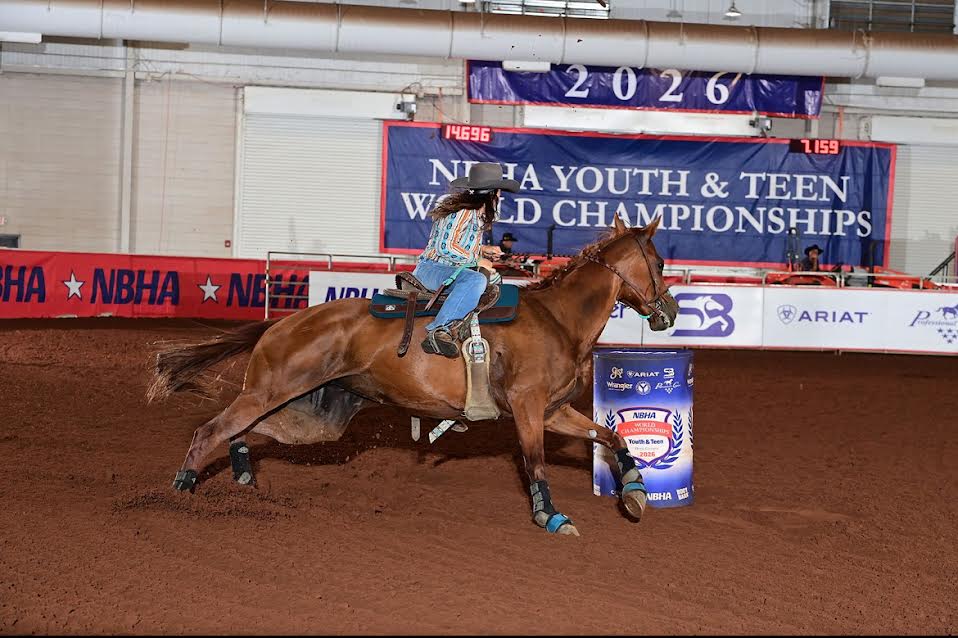 Adriana Ptaszenski and her horse Lily race around a barrel. Source: Adriana Ptaszenski
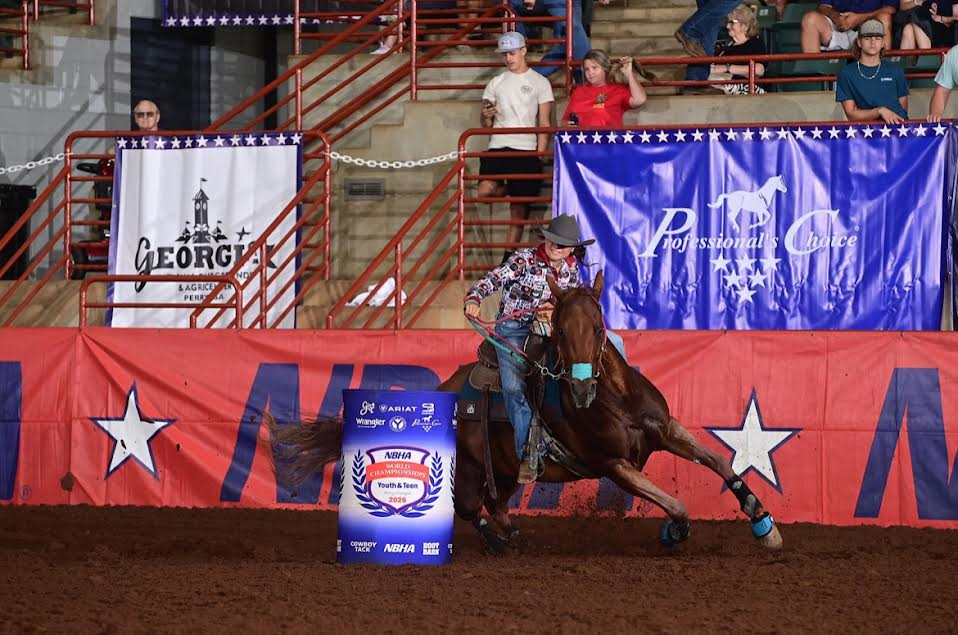 Turning around a barrel to create the clover leaf pattern.
 Ptaszenski and Lily head toward the next barrel.
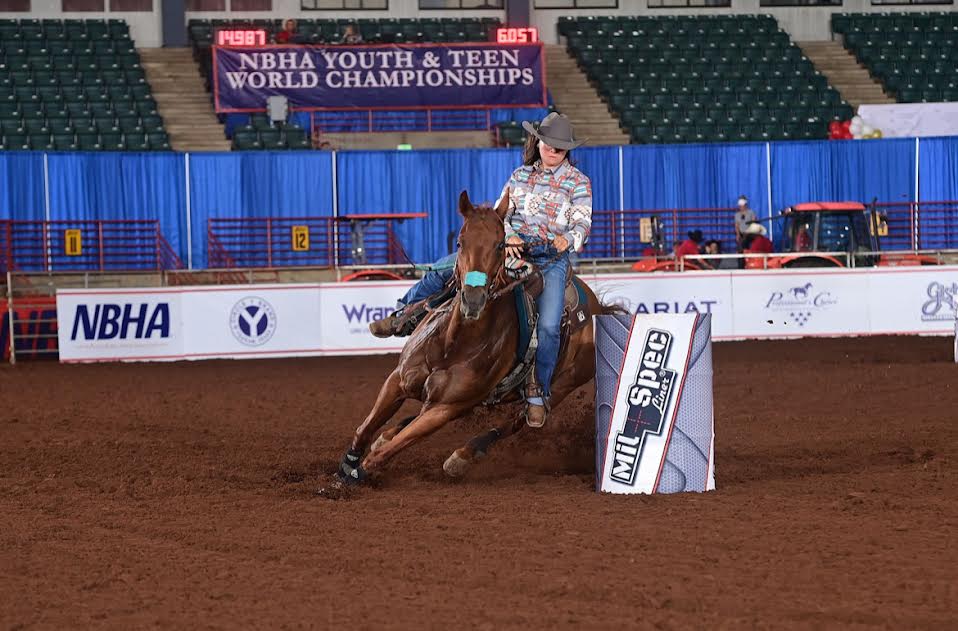 Making a sharp turn.
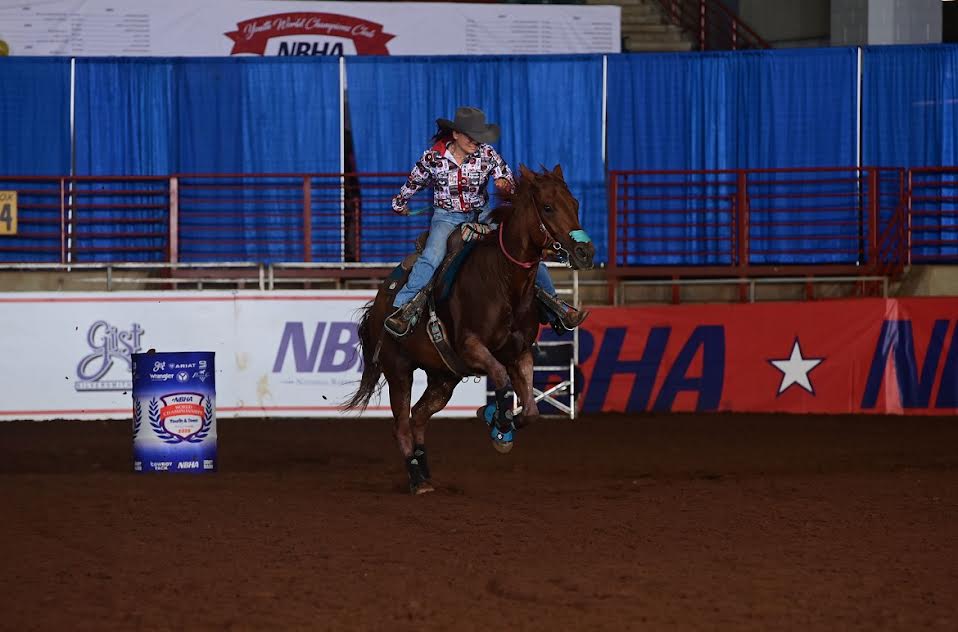 Ptaszenski competed in a division with around 1,500 other riders.
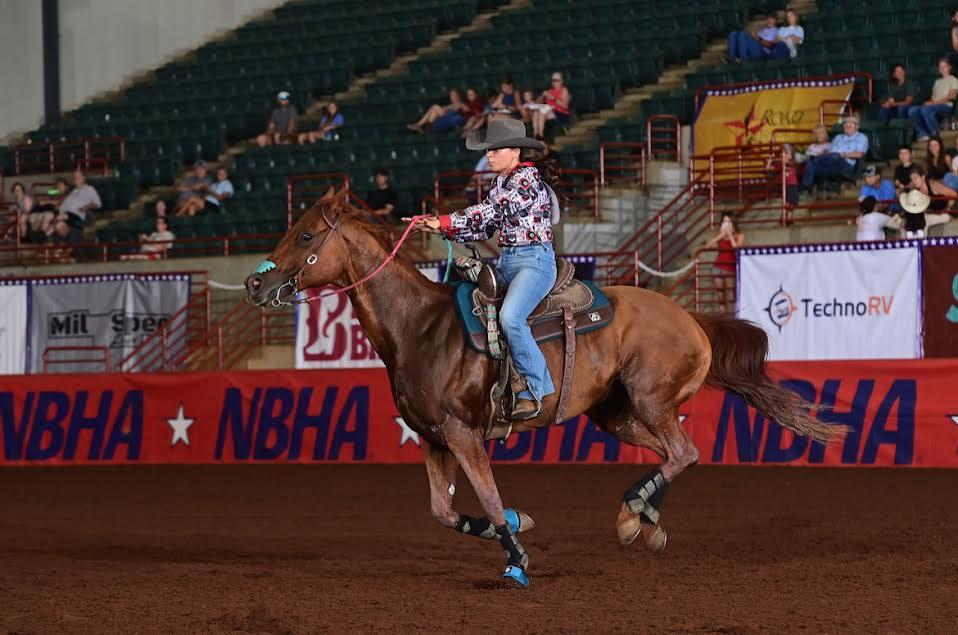
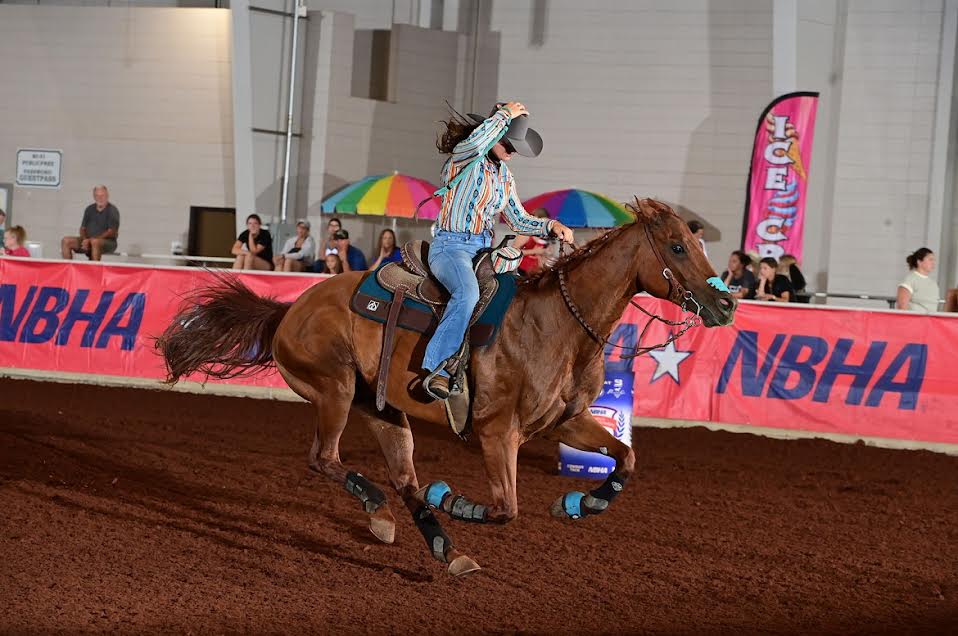 Ptaszenski holds onto her hat as Lily runs.
Adriana Ptaszenski and her horse Lily race around a barrel. Source: Adriana Ptaszenski
Turning around a barrel to create the clover leaf pattern.
Ptaszenski and Lily head toward the next barrel.
Making a sharp turn.
Ptaszenski competed in a division with around 1,500 other riders.
Ptaszenski holds onto her hat as Lily runs.
Ptaszenski holds onto her hat as Lily runs.
Adriana Ptaszenski and her horse Lily race around a barrel. Source: Adriana Ptaszenski
Turning around a barrel to create the clover leaf pattern.
Ptaszenski and Lily head toward the next barrel.
Making a sharp turn.
Ptaszenski competed in a division with around 1,500 other riders.
Ptaszenski holds onto her hat as Lily runs.
Around five years ago, Dartmouth teen Adriana Ptaszenski was at the New England Rodeo watching people compete in barrel horse racing, and as she watched, she knew she wanted in.
“I fell in love with it, and I knew I wanted to do it,” she said.
Ptaszenski previously competed in several other equestrian competitions, including jumping and pleasure, but switched to barrel racing after her dad surprised her with a lesson at a local barn in Berkley, Mass.
In a barrel race, a mounted rider goes as fast as they can around three barrels in a cloverleaf pattern, with the top five fastest riders winning the competition.
If they fail to go in a cloverleaf pattern, knock a barrel down or don’t enter the gate quickly enough, the rider receives a “no time,” meaning they don’t get an official score or time for the round.
“In the end I just trust my horse to take the barrels as she does, whether it’s larger or smaller,” Ptaszenski said. “A lot of times when I go into a ring, I just trust her to go because I have a lot of trust in this horse.”
Ptaszenski recently competed in the 2026 National Barrel Horse Association Youth and Teen World Championship in Perry, Georgia, where she competed against over 1,500 other riders in her division.
Ptaszenski said that she and her horse Lily were close to making it to the final round and “sadly missed it,” but she isn’t letting the loss discourage her.
“I plan on heading back next year determined to make it to the final round,” she said.
Going from shows where she has competed against anywhere from 60 to 800 riders, Ptaszenski said that at first the competition was “really intimidating,” adding that it’s “exciting to be here.”
“It feels unreal, the fact that I have this opportunity,” she said. “Because when I first started, I’d never thought that I would get to this point.”
Ptaszenski said she feels “really grateful” to have her parents and her horse Lily to “take me to this spot.”
She attributed most of her wins to Lily, who, unlike some other horses, can find the barrels on her own and can make the turns with only some of Ptaszenski’s help.
Ptaszenski noted that barrel racing can put a lot of stress on a horse, which can pose some challenges for riders.
“Going into the gate, they can get a little crazy,” she said. “Some horses get a little dangerous.”
She said when she bought her horse Lily, she was “blown up,” a term in barrel racing to refer to a horse that could be difficult to work with.
“She really didn’t like going into the alleyways because it can be a lot of stress, so that was a challenge to work through,” Ptaszenski said.
Four years later, Lily now goes into the gate when Ptaszenski asks her to and is now comfortable and calmed down.
“She was considered a more difficult horse when we first got her, and I’ve gotten lucky that we’ve finally figured out everything that’s wrong with her, and we’ve helped her calm down,” Ptaszenski said.
She noted that Lily has helped her win a lot of competitions and prize money.
“She ended up buying me my first car,” Ptaszenski said.
“I got really lucky with her and helping her figure out how to be more comfortable,” she added.