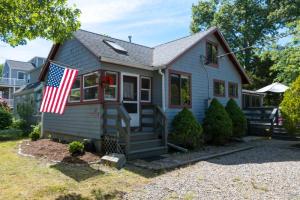












No kidding around: Meet the Goat Lady
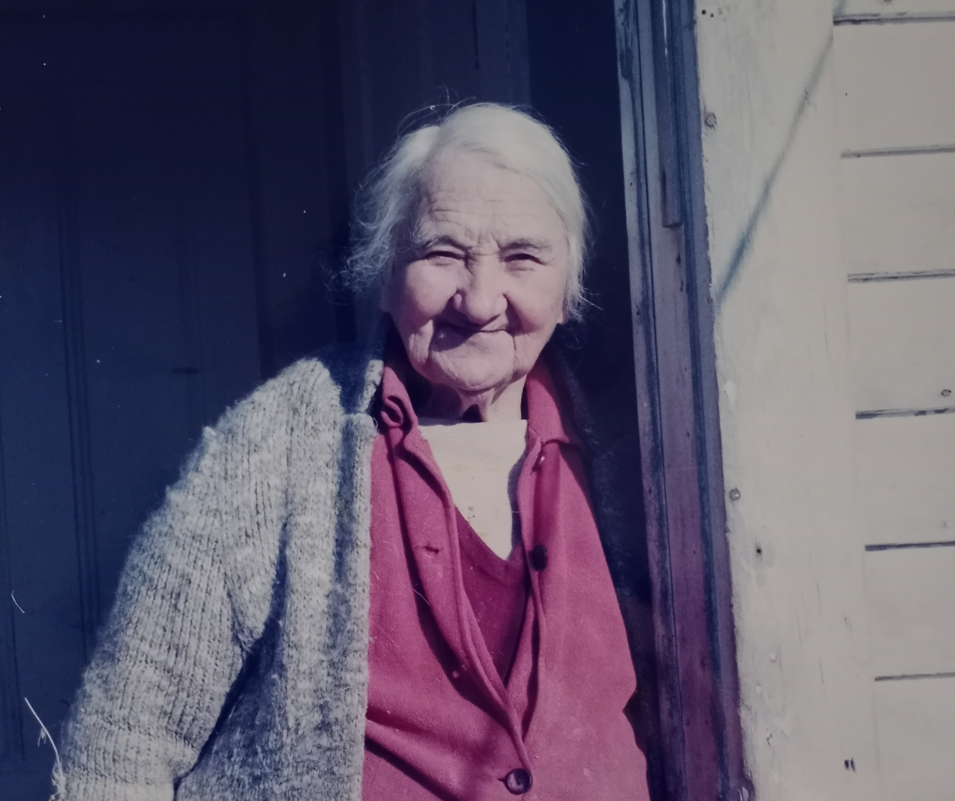 Noelie Houle stands in the doorframe of her home. Source: Jane Bregoli
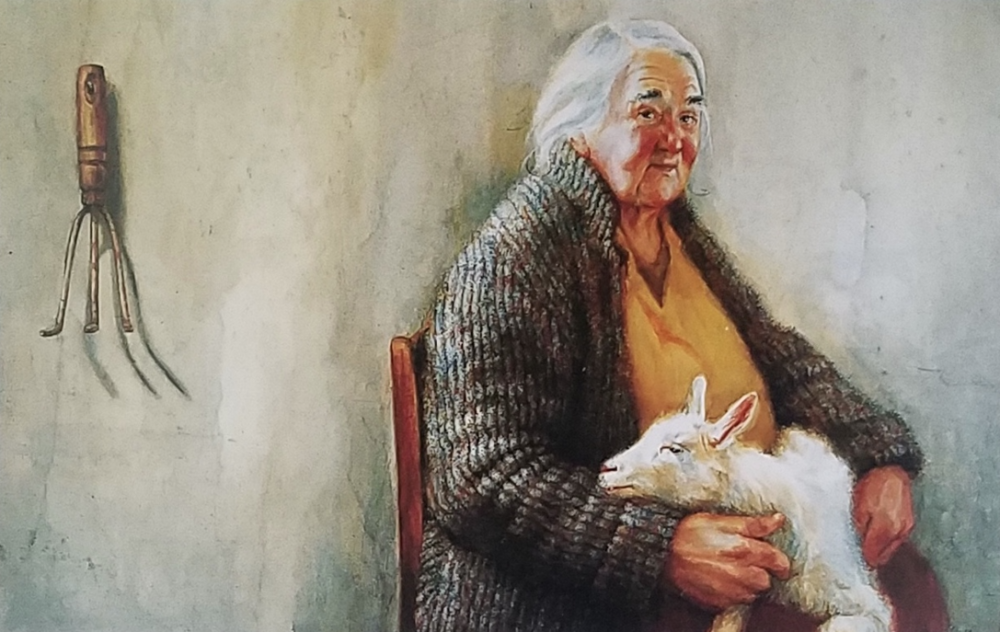 One of Jane Bregoli's many paintings of Houle and her goats.
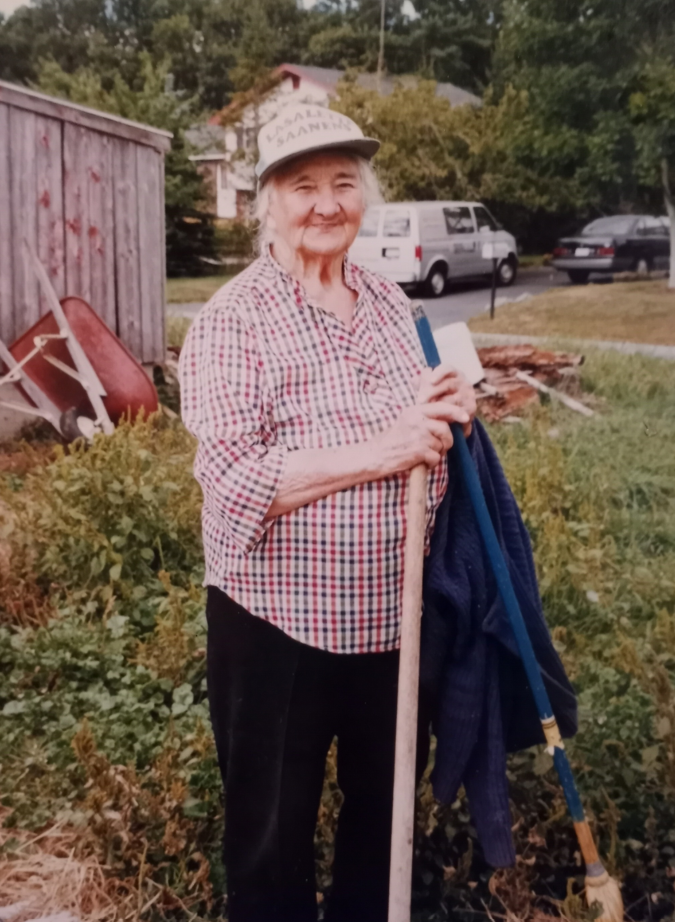 Houle in her garden.
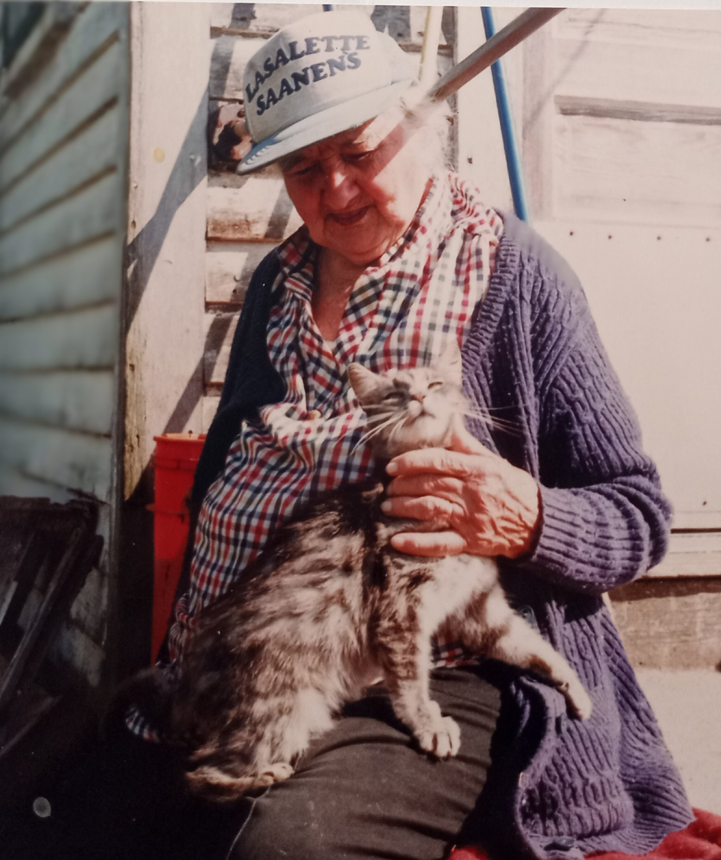 Houle wears a hat that says "Lasalette Saanens," which is what she called her herd of goats.
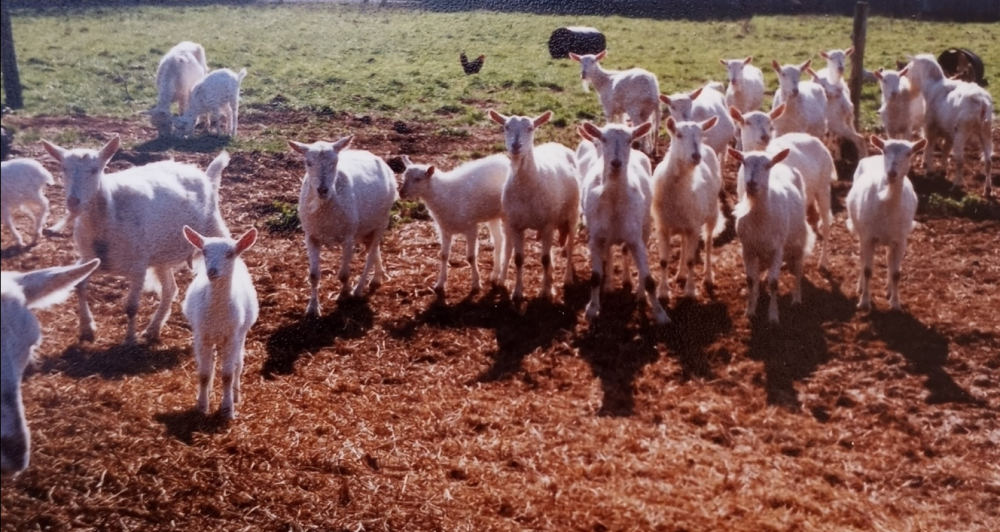 At one point, Houle owned 79 goats.
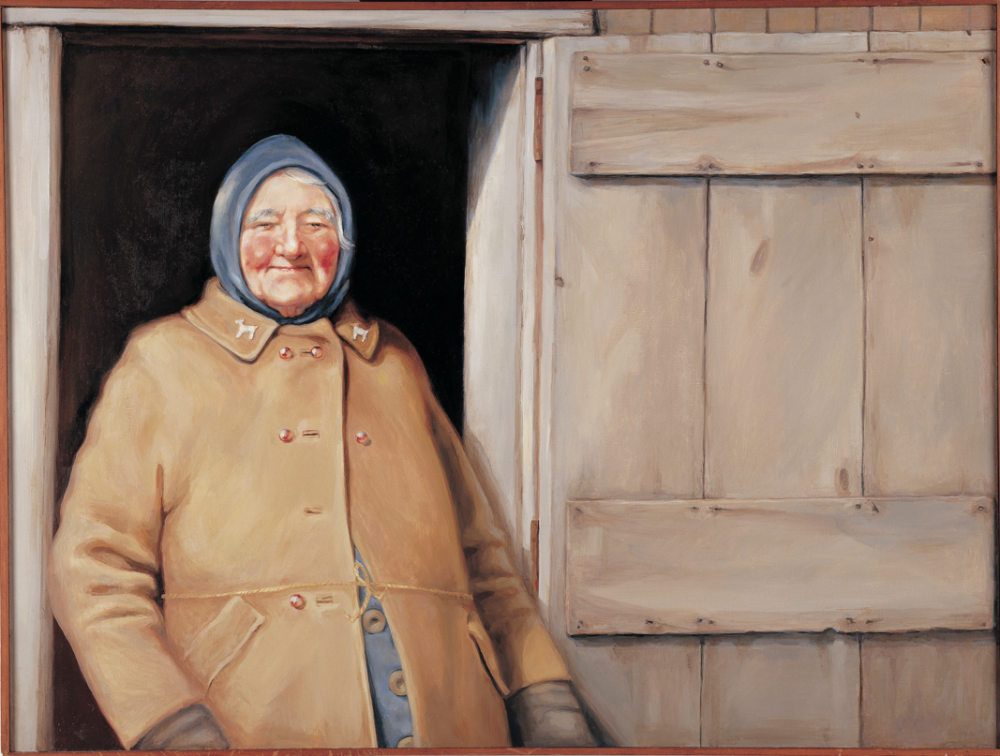 A painting of Houle in a doorway.
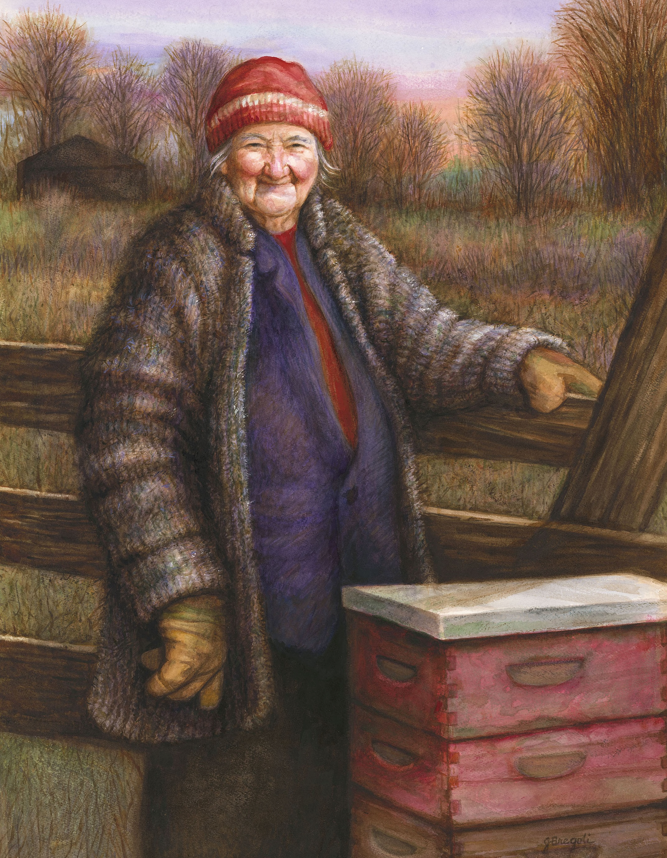 A painting of Houle standing near one of her bee boxes.
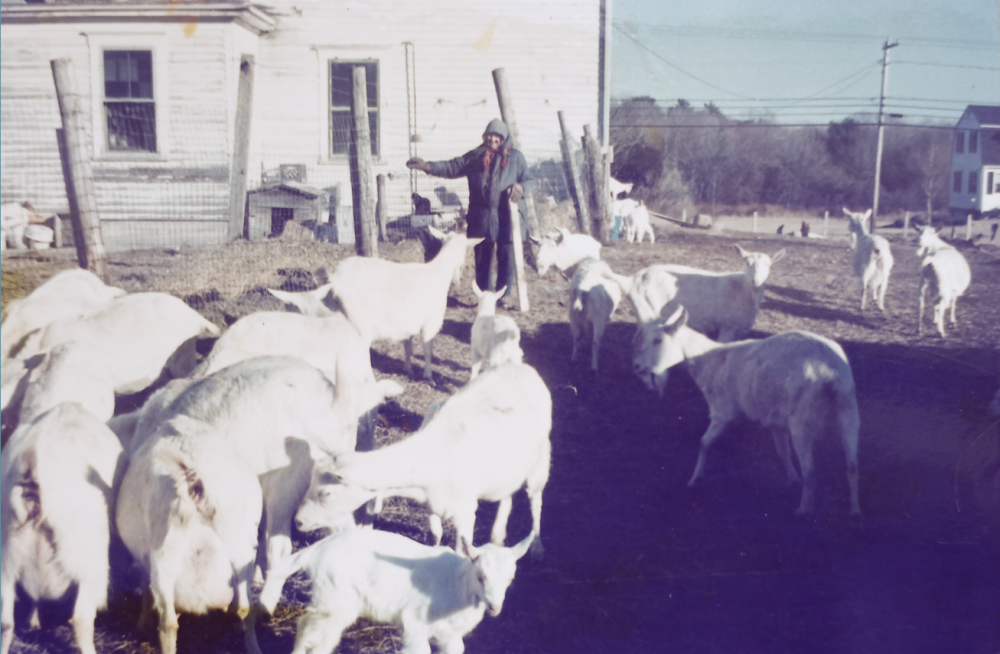 Houle tends to her goats.
Noelie Houle stands in the doorframe of her home. Source: Jane Bregoli
One of Jane Bregoli's many paintings of Houle and her goats.
Houle in her garden.
Houle wears a hat that says "Lasalette Saanens," which is what she called her herd of goats.
At one point, Houle owned 79 goats.
A painting of Houle in a doorway.
A painting of Houle standing near one of her bee boxes.
Houle tends to her goats.
Houle tends to her goats.
Noelie Houle stands in the doorframe of her home. Source: Jane Bregoli
One of Jane Bregoli's many paintings of Houle and her goats.
Houle in her garden.
Houle wears a hat that says "Lasalette Saanens," which is what she called her herd of goats.
At one point, Houle owned 79 goats.
A painting of Houle in a doorway.
A painting of Houle standing near one of her bee boxes.
Houle tends to her goats.
There was once a time when people could drive through the corner of Chase and Lucy Little Roads and spot 79 goats grazing in a field.
People could stop by the house to pet the goats or buy goat milk, honey, eggs and sometimes goat cheese from a woman affectionately known as “the goat lady.”
Noelie Houle, who was born in Quebec, Canada in 1898 and moved to the United States in 1919, started owning goats in the 1950s after she was forced to quit her job at Cornell Dubilier because of arthritis that made her bedridden.
At the time, medicine wasn’t available to treat arthritis, so a doctor instead told her to get a goat and drink its milk.
“The goat came down in a limousine,” said Jane Bregoli, who met Houle in 1989 when she moved to Dartmouth to pursue a master’s degree in painting at UMass Dartmouth.
After some time, Houle’s arthritis improved, and she was able to go back to work at Cornell Dubilier until she retired at 64-years-old.
“Noelie claimed that milking and drinking the goat’s milk cured her arthritis,” Bregoli said.
Even after Houle’s arthritis subsided, she continued caring for and raising goats so that she could help others.
“She wanted to help others as she had been helped by the goat milk,” Bregoli said.
Houle would sell the goats milk to people who couldn't drink cows milk and to nurses from the hospital who would buy the goats milk for babies.
What Houle wouldn't do is sell her goats to anyone who wanted to butcher them, seeing the animals more as pets.
“If you treat a goat affectionately, they give better milk,” Bregoli recalled Houle saying.
Shortly before Houle died in 1992 at 93 years old, she still had around 35 goats, which were moved to a relatively nearby farm with a fenced-in area where the goats could climb rocks and sample a salt lick.
Bregoli knew Houle for the last three years of her life, and for those three years painted portraits of Houle, her goats and life on the farm.
Before meeting Houle, Bregoli would frequently drive by on the way to her daughter’s daycare and see the goats out but no one else.
“I was just fascinated by all the goats, and I thought no one lived there because it would look abandoned,” Bregoli said.
Bregoli, who said she's always been interested in creating portraits, knew then that Houle was someone she wanted to paint and asked if she could use her as a subject.
During the three years they knew each other, Houle wasn't just the subject of Bregoli’s artwork, but also someone who Bregoli and her children befriended.
Bregoli noted that Houle took care of the goats primarily alone because her husband had been in a wheelchair “for a long time” before he died in 1981 and said she and her children would help take care of the goats when they could.
Bregoli’s artwork culminated in a gallery showing at Town Hall at the end of her masters program, and it was only at this point that she realized how many people knew Houle and what the paintings would mean to people.
When she arrived at Town Hall the day of her gallery showing, Bregoli found the stairs “totally packed with people.”
“I had to say, ‘Excuse me, I’m the artist. I had to go in there,’” she said. “That was amazing, and I never expected anything like that.”
She noted that she painted every portrait in her apartment, so no one else saw them or even knew she was working on a series featuring “the goat lady” until the night of her gallery.
“It was only then that I realized the work would resonate with the community,” Bregoli said.