











Slocums River water quality testing to continue through 2027
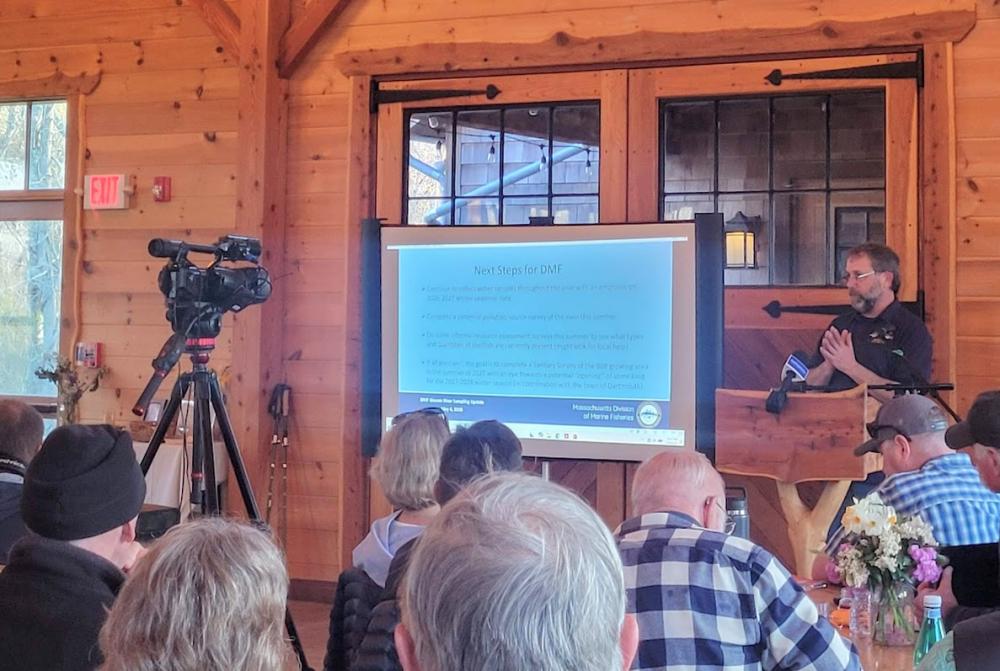 Terry O'Neil explains what some of the next steps are for monitoring the Slocums River during a presentation on Monday, May 4. Photos by Abby Van Selous
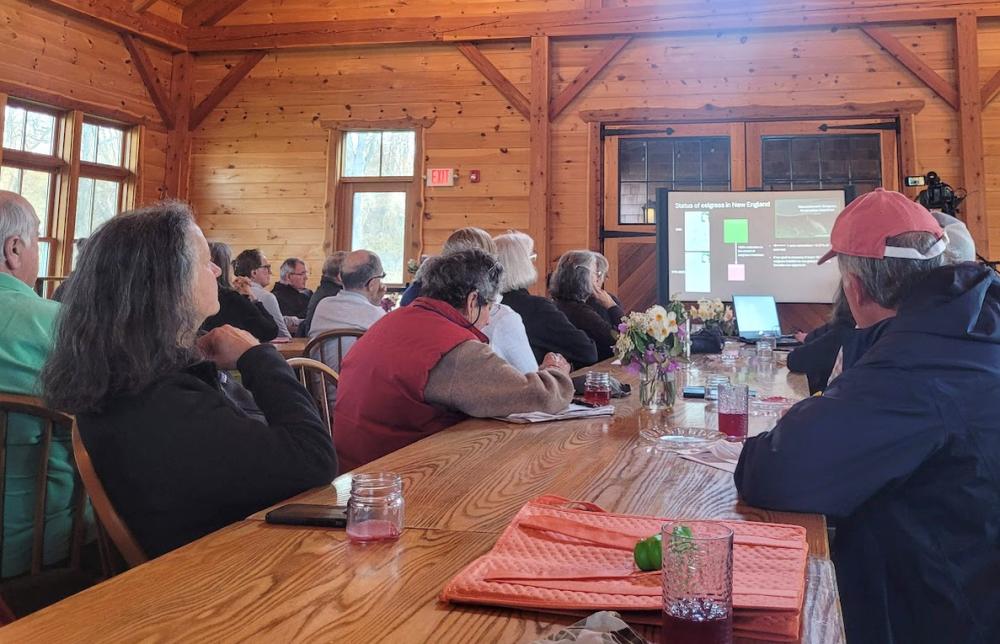 Dartmouth residents attend a meeting to learn about the state of the Slocums River.
Terry O'Neil explains what some of the next steps are for monitoring the Slocums River during a presentation on Monday, May 4. Photos by Abby Van Selous
Dartmouth residents attend a meeting to learn about the state of the Slocums River.
Dartmouth residents attend a meeting to learn about the state of the Slocums River.
Terry O'Neil explains what some of the next steps are for monitoring the Slocums River during a presentation on Monday, May 4. Photos by Abby Van Selous
Dartmouth residents attend a meeting to learn about the state of the Slocums River.
More than 30 years after the Slocums River closed because of poor water quality, the town is now looking to see if it can be reopened for shellfishing.
In January 2025, the Division of Marine Fisheries began collecting samples from five locations along the Slocums River to determine how clean the water is.
Samples taken over the year have so far shown that the concentration of coliform bacteria in the water still exceeds the safety standards, meaning that the river can’t yet reopen for shellfishing or any other uses.
Out of the 70 samples taken between February 2025 and March 2026, 12 exceeded the standard for coliform bacteria, according to research conducted by the Division of Marine Fisheries.
High levels of coliform bacteria — which is always found in animals’ digestive tracts and waste — can signal whether other bacteria that can cause serious illnesses like E. coli are present.
“[Coliform] is the indicator organism that we look at to show the presence of potential human waste,” said Terry O’Neil, the senior shellfish biologist at the Division of Marine Fisheries.
Sewage discharge that occurs when heavy rain overloads New Bedford’s sewer systems has been deemed a contributing factor to the presence of coliform bacteria and the Slocums River’s poor water quality.
When overflow occurs, raw untreated sewage can empty directly into Buzzards Bay, with natural tides and currents then moving the contaminated water into Dartmouth’s waterways, including the Slocums River.
To test the water, researchers from the Division of Marine Fisheries focused on five locations spread out along the river and tried to gather samples when the tide was ebbing to “get the worst case pollution scenario,” O’Neil said.
He noted that in his tests he wants to “look at all conditions,” such as how water quality is affected by rainfall and the different seasons.
While the data doesn’t currently allow for the reopening of the river, the Division of Marine Fisheries has several next steps that could lead to its reopening.
Scientists will continue to collect water samples over the year with a particular emphasis on the 2026-27 winter season.
O’Neil said that his original plan had been to sample the river twice a month during the 2025-26 winter season, but was thwarted by the weather.
They will also complete a potential pollution source survey of the river over the summer and do some informal resource assessment surveys to see what types and quantities of shellfish are currently in the river.
If the division's sampling and surveys go well, the goal is to complete a sanitary survey during the summer of 2027 to determine whether the river can be reopened for the 2027-28 winter season.