












Art in wax at the Dartmouth Cultural Center
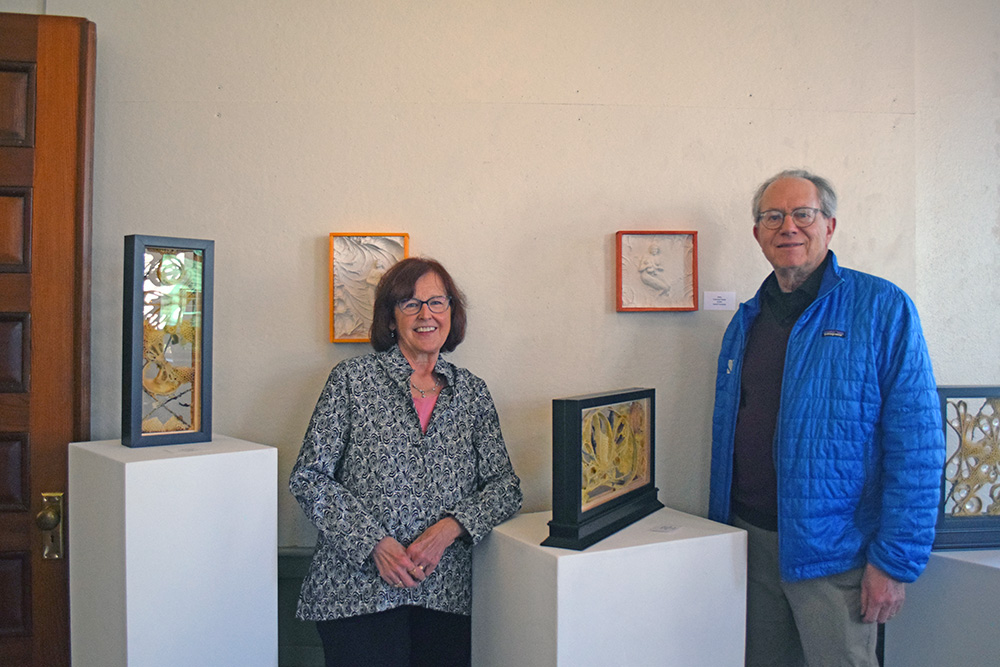 Susan Medyn and David Formanek pose in front of some of their art. Photos by Kat Sheridan
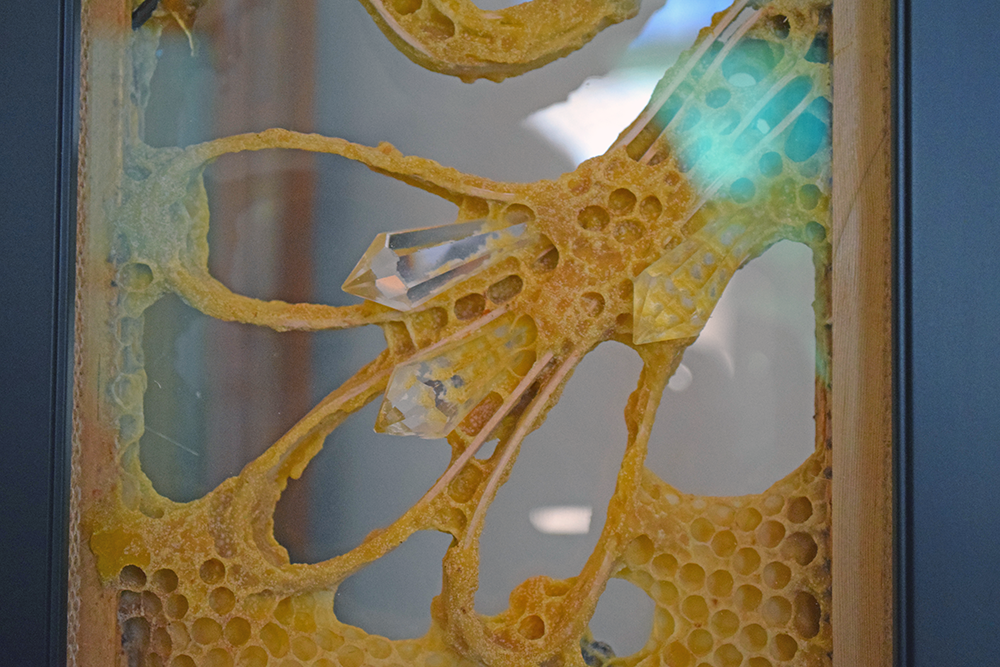 A piece where the bees built around some crystals.
 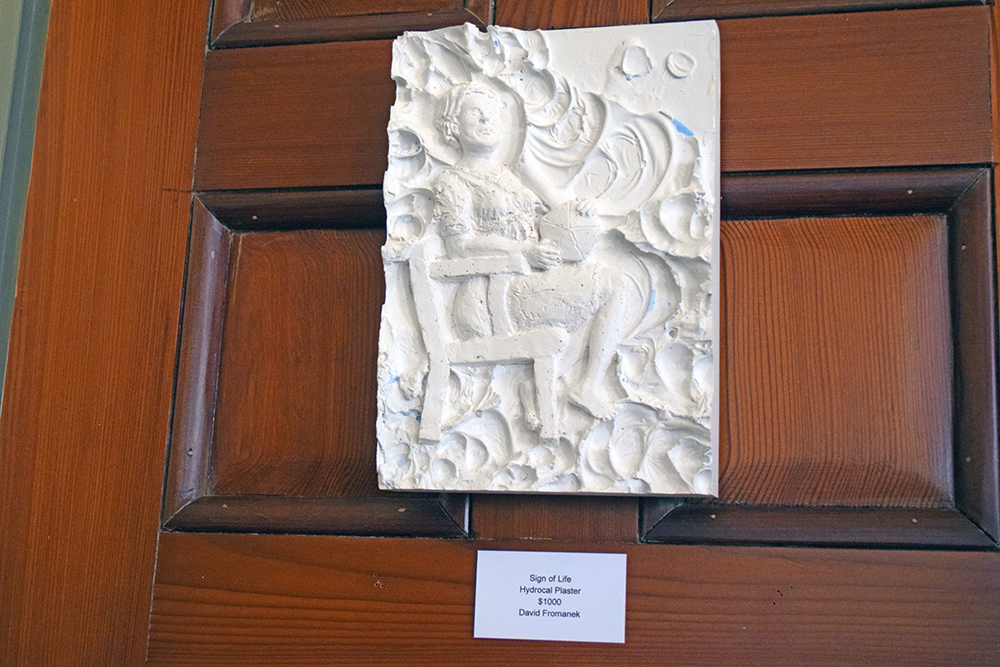 A piece featuring a woman.
 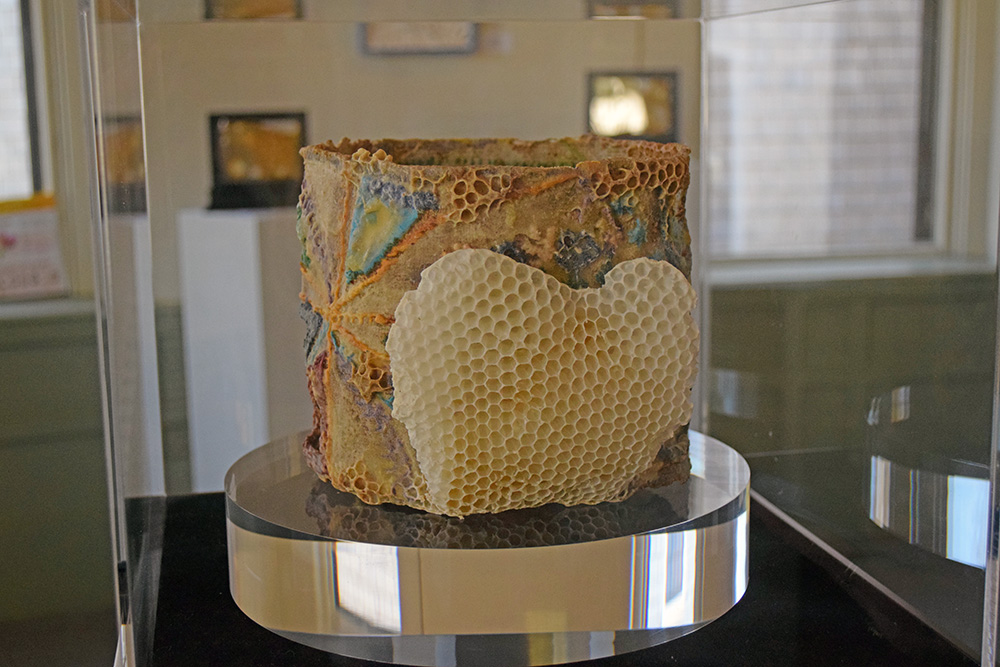 "The Unbroken Thread."
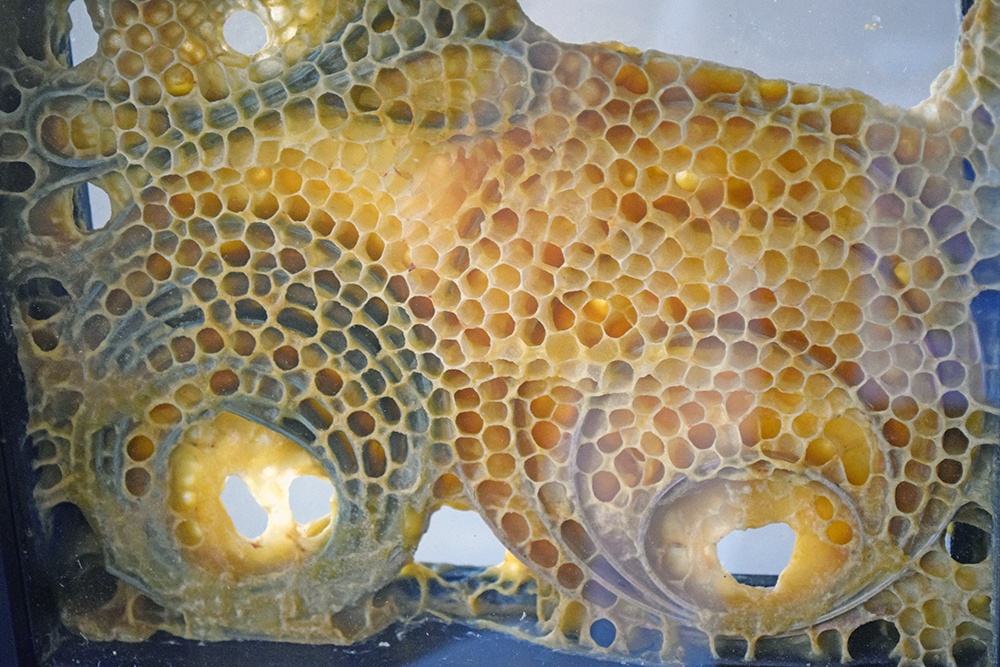
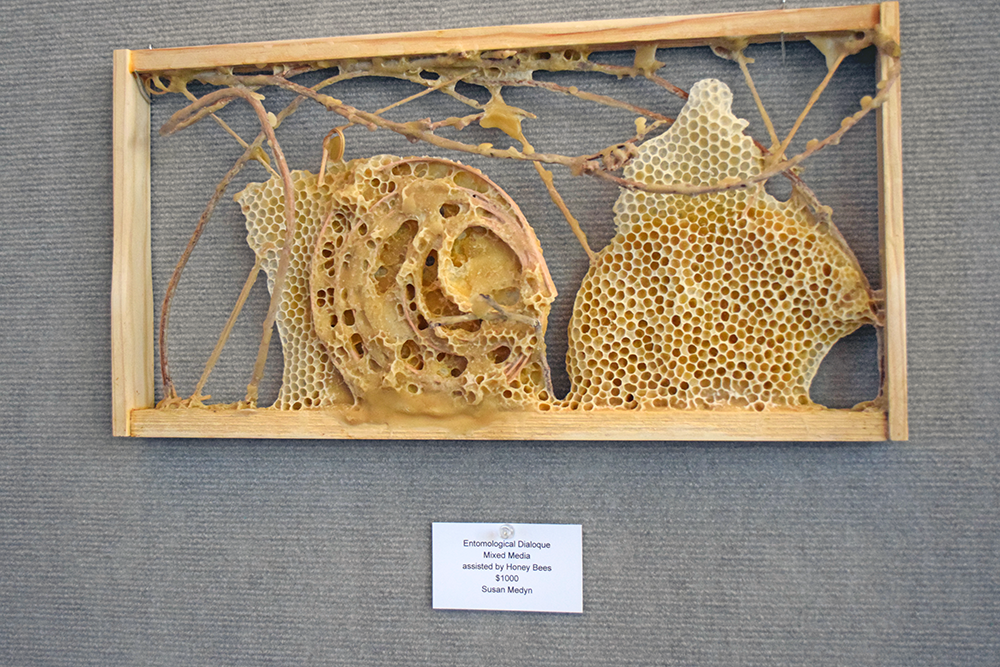 A hive with a freeform and spiral wax structure.
 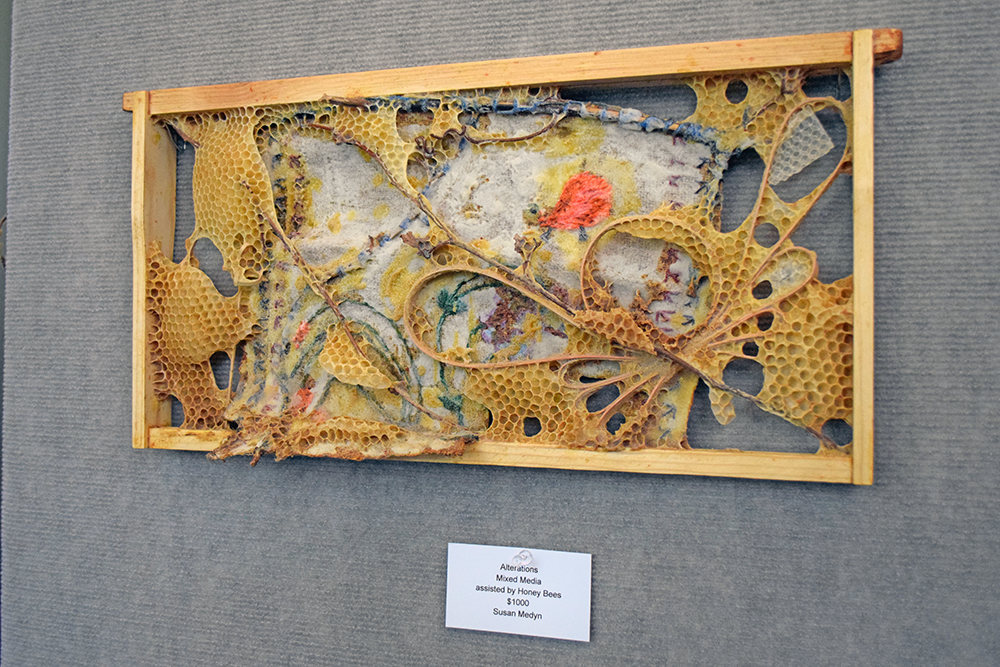 A piece that incorporates a piece of linen.
 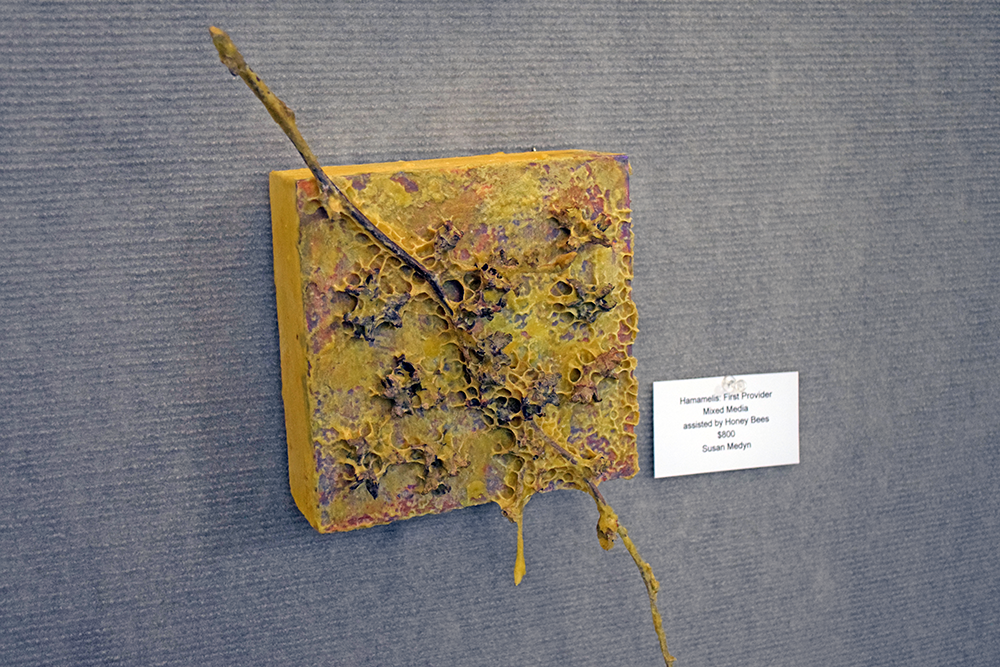 This piece incorporated a branch with tree resin, which the bees use as a medicine.
 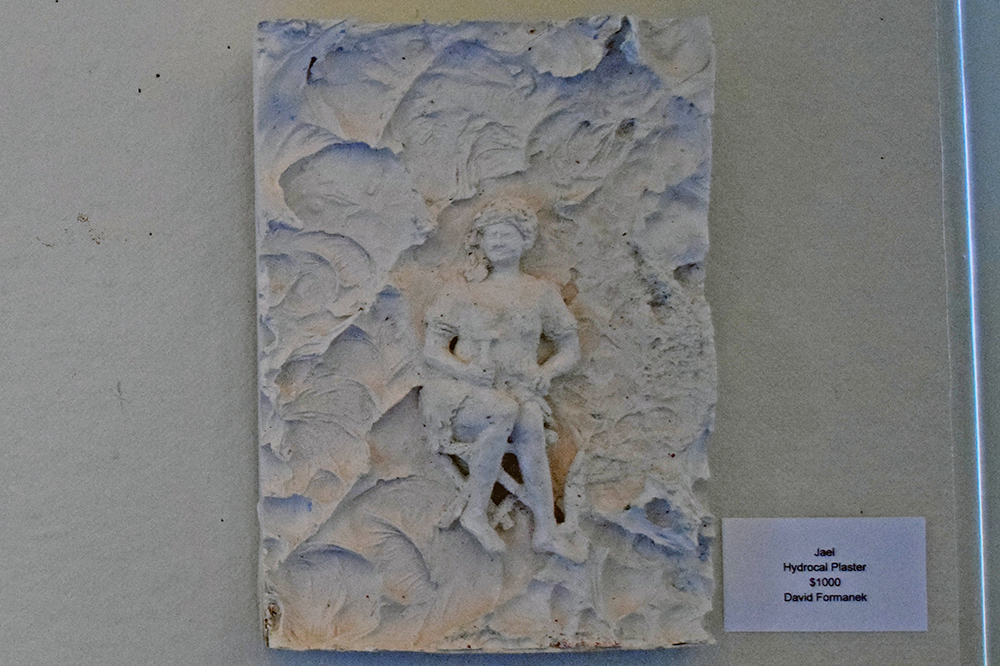 A piece by Formanek featuring a woman.
  A swirl of wood with the hive.
 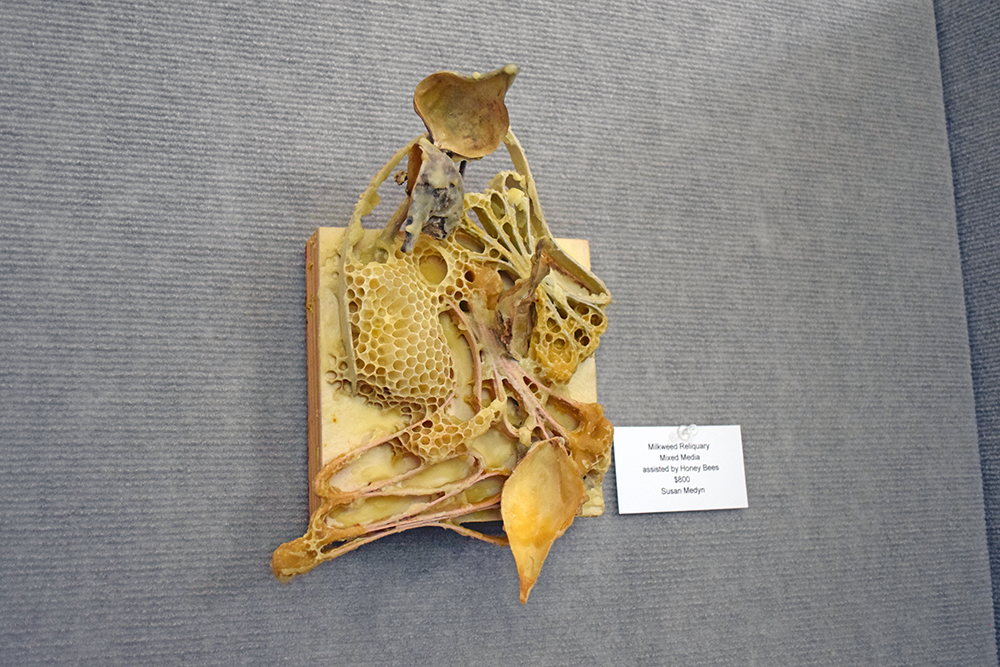 Medyn often uses milkweed in her pieces.
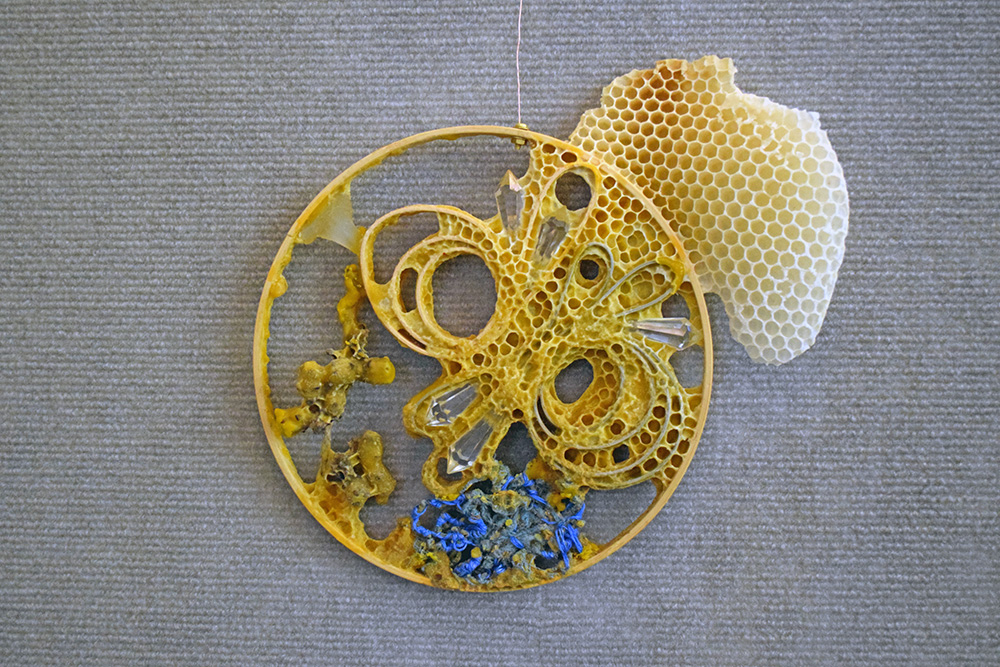 Many pieces have flowers, which bees are attracted to.
Susan Medyn and David Formanek pose in front of some of their art. Photos by Kat Sheridan
A piece where the bees built around some crystals.
A piece featuring a woman.
"The Unbroken Thread."
A hive with a freeform and spiral wax structure.
A piece that incorporates a piece of linen.
This piece incorporated a branch with tree resin, which the bees use as a medicine.
A piece by Formanek featuring a woman.
A swirl of wood with the hive.
Medyn often uses milkweed in her pieces.
Many pieces have flowers, which bees are attracted to.
Many pieces have flowers, which bees are attracted to.
Susan Medyn and David Formanek pose in front of some of their art. Photos by Kat Sheridan
A piece where the bees built around some crystals.
A piece featuring a woman.
"The Unbroken Thread."
A hive with a freeform and spiral wax structure.
A piece that incorporates a piece of linen.
This piece incorporated a branch with tree resin, which the bees use as a medicine.
A piece by Formanek featuring a woman.
A swirl of wood with the hive.
Medyn often uses milkweed in her pieces.
Many pieces have flowers, which bees are attracted to.
This couple makes very different art with the same medium: wax. David Formanek and Susan Medyn unveiled their exhibit, “Found Wax” at the Dartmouth Cultural Center on Friday, May 1.
The curator of the Cultural Center, Jill Law, saw Medyn’s work and decided to invite the couple to show their art.
“I was so taken aback by this approach using bees, which are such a vital aspect of our life,” said Law.
This is the first time the couple has shown their work together in a joint exhibit in 35 years.
“Both our works reflect this element of beauty in a different way,” said Medyn.
They decided to name the exhibit “Found Wax” because Formanek works in a process similar to “Lost Wax,” a 6,000 year process of using wax to recreate a piece of art in metal. They chose the name because Medyn also works in the creation of wax.
Formanek uses the wax to create backgrounds for the clay figures he creates, by pouring hot paraffin wax into cold water to create intricate swirls. During the process, the wax disintegrates.
“The cold water congealed the wax into these beautiful curves,” said Formanek.
He then coats the wax and clay figures in rubber to create molds, which he fills with plaster to create his reliefs.
Formanek is a trained artist, who has “always been an artists since my youth.” He started taking a figure class last year, but found that the clay figures he made had no environment to sit in. He remembered a girlfriend back in college would make candles, and decided to try using wax for his art.
Medyn is a self taught artist, with her usual medium being watercolor. After learning about the negative impact humans are having on bees, she decided she wanted to incorporate her beekeeping into her art.
“I really wanted to just highlight how much more intelligence there is in the smallest insect that we don’t necessarily pay attention to,” said Medyn.
Medyn works with bees on collaborative pieces of co-species art. She puts pieces of organic material such as flowers, milkweed, seeds, linen and burlap in that the bees build their hives around.
She gets linen, burlap and embroidery thread from a company called Zele Nava, which sources their materials from families in Ukraine. They do this to support and help families in need.
To further help, Medyn is giving all the money she raises from her piece “The Unbroken Thread” to Zele Nava to redistribute to families in the Ukraine.
She is currently working with entomologists for her next show, and learning a lot about bees. For example, they have two brains and are extremely intelligent.
“They are incredible architects, mathematicians, geometricians,” said Medyn.
It took her five years to figure out how to work with the bees, as when she put in things that they wouldn’t typically bring into the hive the bees would just throw it out.