











Dartmouth students showcased in statewide Civics Showcase
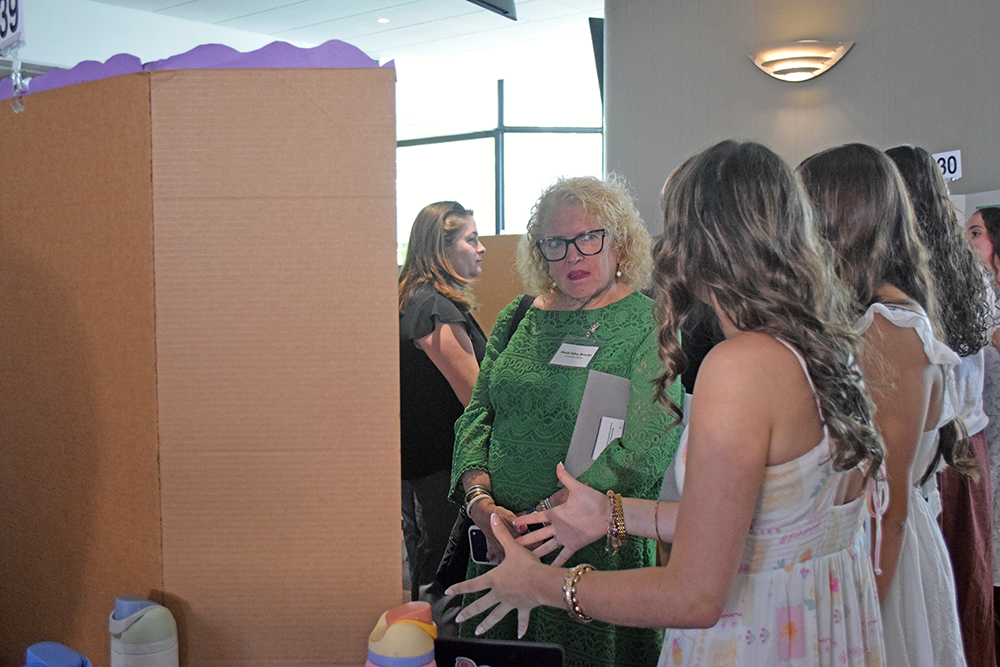 Heidi Silva-Brooks learns more about preventing teenage suicide. Photos by Kat Sheridan
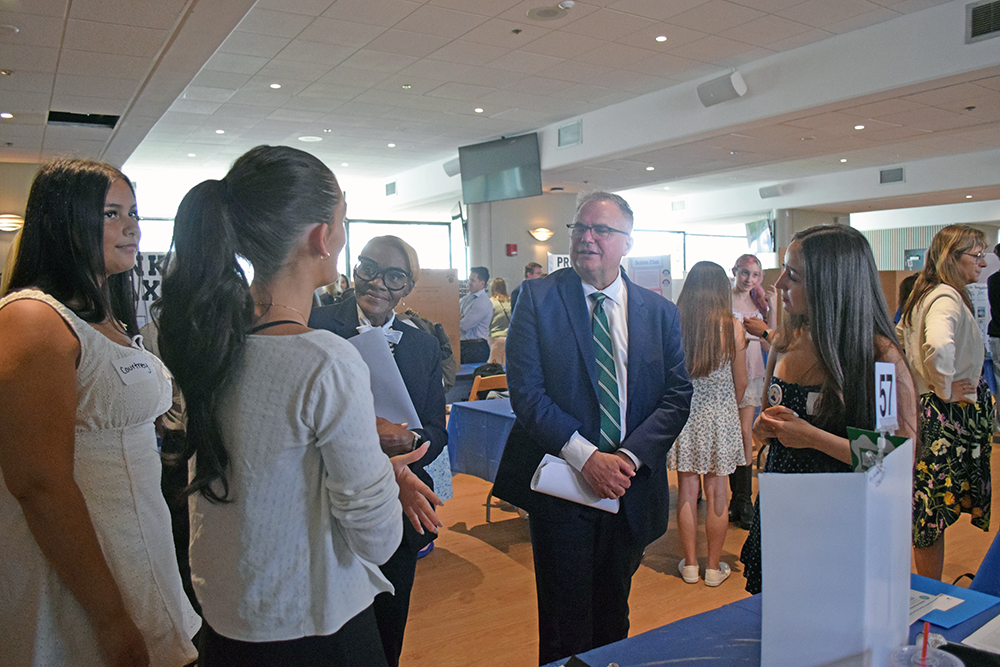 Chris Markey learns more about road conditions.
 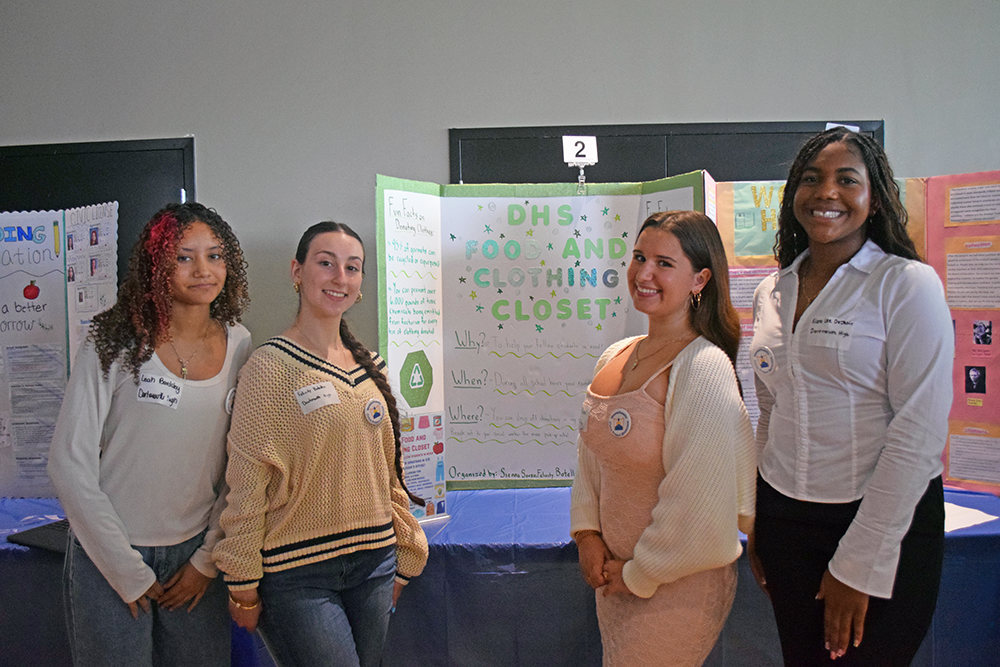 Leah Bardsley, Felicity Botelho, Sienna Sousa and Kiara Lee DeJesús created a community food and clothing closet.
 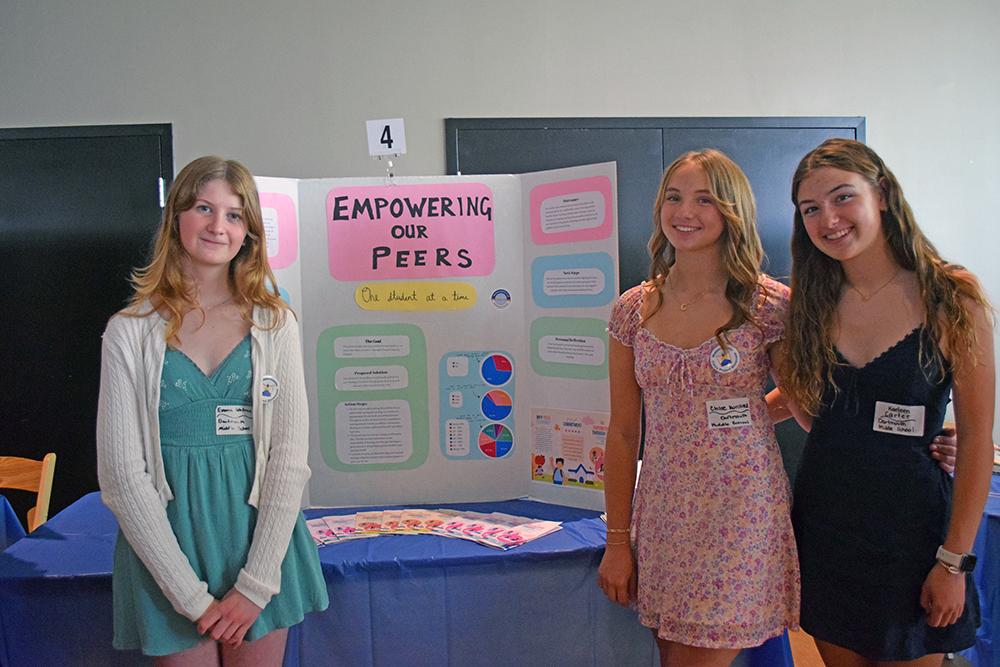 Emma Wallace, Chloe Korolnek and Kaeleen Carter created a free tutoring program.
 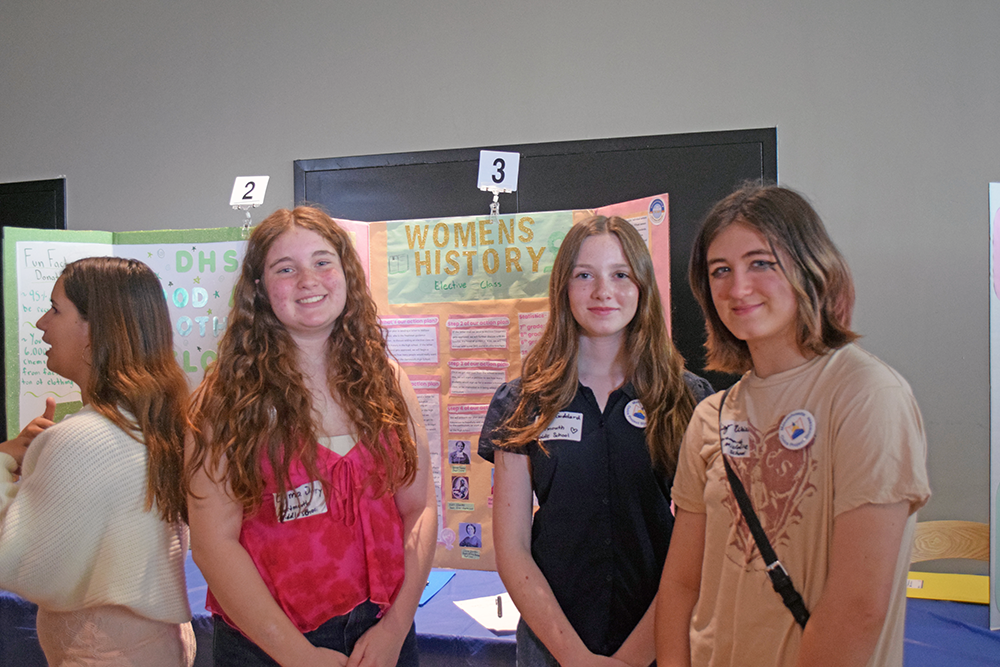 Emelia Goddard, Lily Weisberg and Emma Dury proposed a women's history class.
 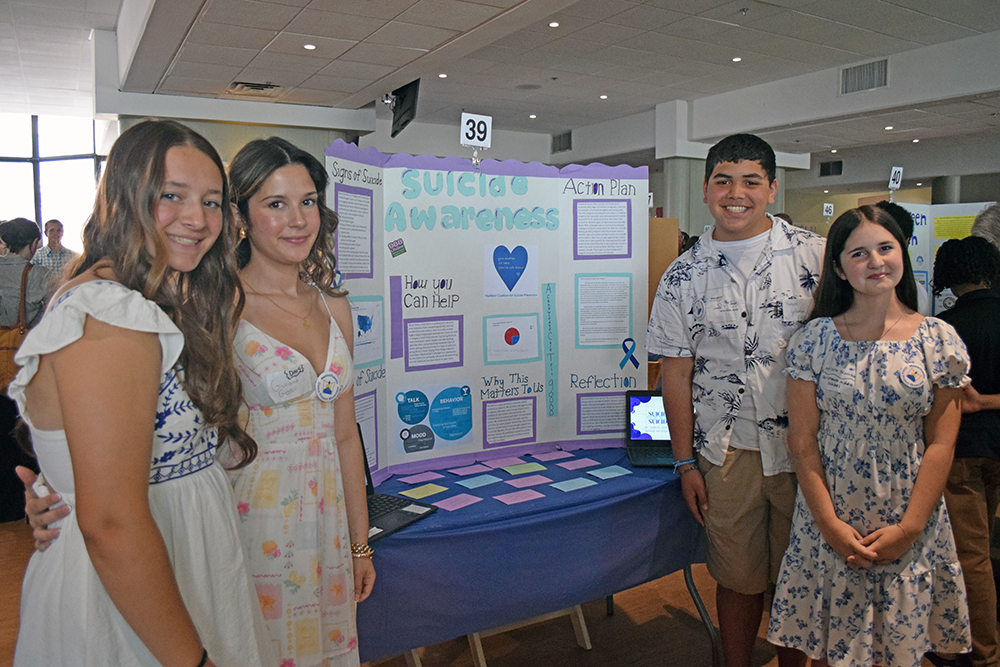 Avery Imbeau, Giuliana Gioni, Hudson Iglsomar and Adriana Dionisio researched teenage suicide.
 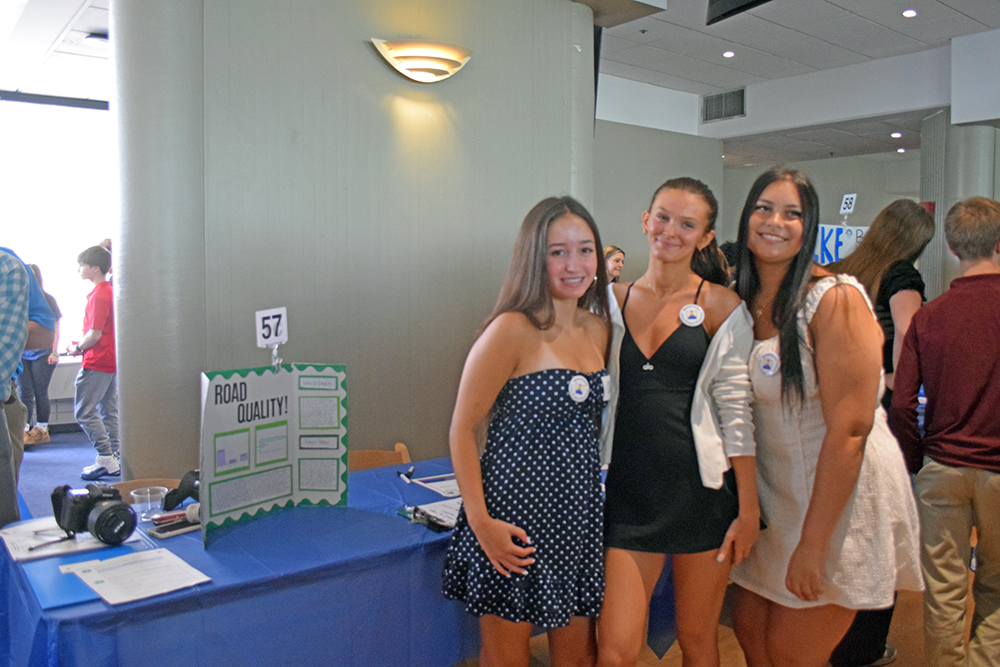 Alexa Oliver, Ava Nicholson and Courtney Ayano researched road conditions.
Heidi Silva-Brooks learns more about preventing teenage suicide. Photos by Kat Sheridan
Chris Markey learns more about road conditions.
Leah Bardsley, Felicity Botelho, Sienna Sousa and Kiara Lee DeJesús created a community food and clothing closet.
Emma Wallace, Chloe Korolnek and Kaeleen Carter created a free tutoring program.
Emelia Goddard, Lily Weisberg and Emma Dury proposed a women's history class.
Avery Imbeau, Giuliana Gioni, Hudson Iglsomar and Adriana Dionisio researched teenage suicide.
Alexa Oliver, Ava Nicholson and Courtney Ayano researched road conditions.
Alexa Oliver, Ava Nicholson and Courtney Ayano researched road conditions.
Heidi Silva-Brooks learns more about preventing teenage suicide. Photos by Kat Sheridan
Chris Markey learns more about road conditions.
Leah Bardsley, Felicity Botelho, Sienna Sousa and Kiara Lee DeJesús created a community food and clothing closet.
Emma Wallace, Chloe Korolnek and Kaeleen Carter created a free tutoring program.
Emelia Goddard, Lily Weisberg and Emma Dury proposed a women's history class.
Avery Imbeau, Giuliana Gioni, Hudson Iglsomar and Adriana Dionisio researched teenage suicide.
Alexa Oliver, Ava Nicholson and Courtney Ayano researched road conditions.
Over 220 students from 15 counties gathered at UMass Dartmouth on Friday, May 29 to show their research on current civics issues. Five groups of students from Dartmouth were in attendance; three from the middle school and two from the high school.
“I think this event is tremendous because it gets our students talking to folks who are going to provide real world feedback,” said Executive Director Ross Thibault
Statewide, all students in grades eight and once in high school are required to research a current civics issue and pitch some potential steps forward. They can work as a team or by themselves. In Dartmouth, the project is completed in grade 11.
The students previously presented their work to judges, who picked their favorites to go to the statewide showcase.
In the final showcase at UMass Dartmouth, many members of the community showed up to learn what the students care about, such as Bristol County State Representative Chris Markey, Select Board Chair Heidi Silva-Brooks and members of the School Committee. Many others from outside Dartmouth were in attendance.
“Our students don’t always have the opportunity to interact with folks like that on a day to day,” said Thibault, “I think sometimes adult community members, adult community leaders, focus on adult problems and we don’t always listen to our youth.”
The first group of students did a project where they started a Food and Clothing Closet at Dartmouth High School. The students were eleventh grade Leah Bardsley, Felicity Botelho, Sienna Sousa and Kiara Lee DeJesús.
“Especially right now, with the rise of inflation, there are over 200 kids at Dartmouth High School who are on free and reduced lunch, and they may be insecure about their financial issues,” said Sousa.
She added, “We just wanted to create something that was very discreet for students to be able to feel comfortable to pick up food and clothing that they can bring to their households not only for them but also their families that are in need.”
The group found that 95% of garments can be recycled or repurposed, preventing 6,000 pounds of toxic chemicals from being emitted from factories. The closet will be open throughout the school year, and they are encouraging students to donate food and clothes for their classmates.
Eighth graders Emelia Goddard, Lily Weisberg and Emma Dury presented their project on why the high school should have a women’s studies class..
“We’d like to see more people get to know about women’s history,” said Weisberg. “I also myself have a younger sister, so it would be awesome to see her in the future get to know her value and her place in history.”
They argued that men have been the focus in history classes and typically write the curriculum, leaving women out of the history students learn. They want to decrease the stigma of being a feminist and motivate young girls. They wrote a letter to the freshman guidance counselor for the high school about adding an elective on women’s history.
The third group consisted of eleventh graders Emma Wallace, Chloe Korolnek and Kaeleen Carter. Their project focused on creating a free tutoring program so financials aren’t a barrier for education.
“We’ve recognized that maybe not so much in our community, but in communities around us, are really struggling to support the children in the community’s education,” said Korolnek. “We are really passionate that education should be a fair opportunity for everyone.”
They found peer tutoring can build confidence and reinforce learning, but as the percentage of low income students rises, tutoring becomes more of a privilege. The students reached out to 30 schools to learn about accessibility in tutoring and made informative fliers with the information they found. They are now looking for low income third to seventh graders to tutor.
The fourth group consisted of eighth graders Avery Imbeau, Giuliana Gioni, Hudson Iglsomar and Adriana Dionisio. They looked into teenage suicide and how to prevent it in the schools.
“We know a lot of people in our school and in our community who struggle with mental health,” said Gioni. “Since it’s been progressing over the past 10 years, we really just want to tell people that it’s okay and you’re not alone.”
They reached out to Superintendent June Saba-Maguire about starting Intensive S.O.S. (Signs of Suicide) programs in the school, as these programs can reduce suicidal thoughts and actions by 64%. At their table, they had information on how to spot suicidal tendencies, such as a person talking about dying, great shame or guilt, being a burden, hopelessness or having personality changes.
The fifth group looked at the poor condition of the roads in Dartmouth. The students who researched this were juniors Alexa Oliver, Ava Nicholson and Courtney Ayano.
“We personally are all new drivers, so we’re now realizing our road conditions are not adequate to be completely safe,” said Ayano, “So we really just wanted to make the roads a lot safer for everybody.”
They sent out surveys to learn more about the issues with the roads, such as that 84.5% of students felt that the conditions of the road “often” pose threats to public safety.
Thibault said that the civics showcase gives the students "the opportunity to not only interact but to lend their voice."
“[They can] really spotlight for our adult leaders in the community, ‘Here are the issues that are important to us and we’d like to help in addressing them,’” said Thibault.