











Groundwater contamination, soil conditions topics of concern at Sherbrooke Farms meeting
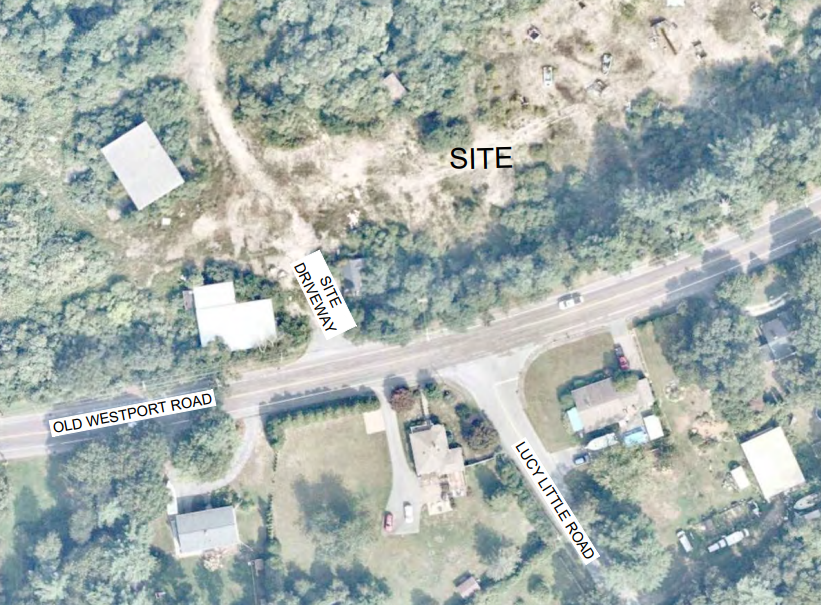 An aerial view showing the proposed location of Sherbrooke Farms and its entrance. Source: Bowman Consulting
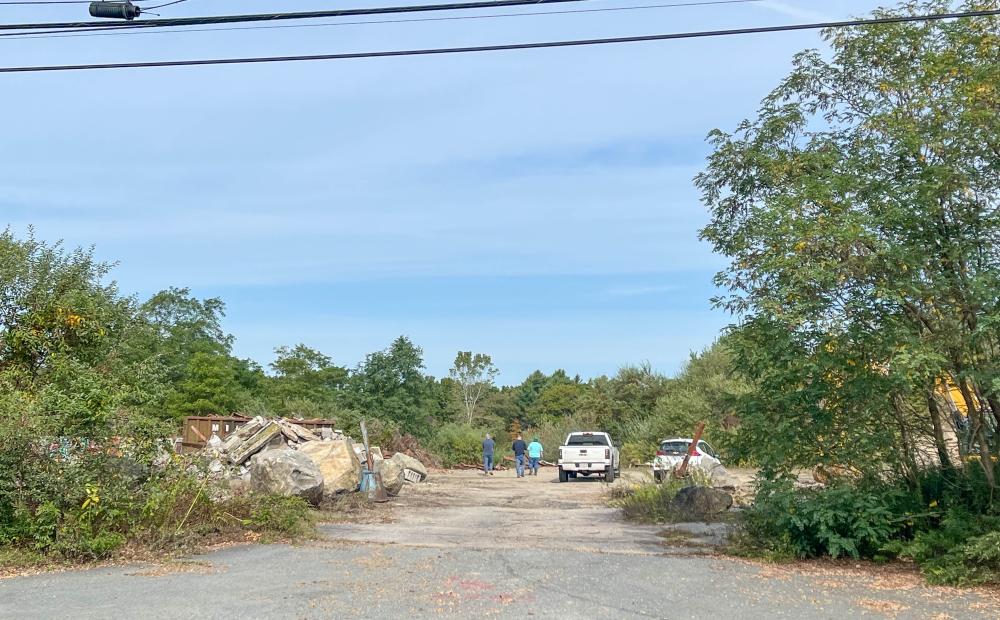 Sherbrooke Farm would be located at the site of Pine Hill Sand and Gravel. Photo by Abby Van Selous
An aerial view showing the proposed location of Sherbrooke Farms and its entrance. Source: Bowman Consulting
Sherbrooke Farm would be located at the site of Pine Hill Sand and Gravel. Photo by Abby Van Selous
Sherbrooke Farm would be located at the site of Pine Hill Sand and Gravel. Photo by Abby Van Selous
An aerial view showing the proposed location of Sherbrooke Farms and its entrance. Source: Bowman Consulting
Sherbrooke Farm would be located at the site of Pine Hill Sand and Gravel. Photo by Abby Van Selous
Sherbrooke Farms, a proposed 156-unit housing project that would be located at 498 Old Westport Road, has been an ongoing concern for residents, with environmental impacts and public health often at the forefront of the conversation.
On Thursday, Dec. 18, engineers from Coneco Engineering discussed their findings from an environmental study — paid for by Sherbrooke Farms LLC — in which they evaluated soil conditions and contamination levels in the property’s west corner where petroleum has leaked into the soil.
The property, once the site of Pine Hill Sand and Gravel, has a history of gravel mining, concrete production and of being used as a dumping ground, which is where contamination concerns stem from.
Beginning in the 1930s and up to 2001, the property was used as a solid waste disposal and dumping site, which included demolition debris, metal debris and car parts, foundry sand and aluminum cans.
According to longtime resident Klara Barlow, who spoke at a Sept. 25 Zoning Board of Appeals meeting, horses have also been buried on the property, as well as rebar, trucks, cement and more.
Resident Jim Costa also previously noted that dumping wasn’t limited to burying waste but that people had also dumped materials into ponds on the property, such as car parts.
From 1950 to 2018 there were 13 diesel fuel and gasoline storage tanks, with six underground and seven aboveground tanks on the property that have all now been removed, according to Marc Brochu of Coneco Engineering. There were also tanks associated with truck washing, and a former septic system.
In their study, engineers from Coneco Engineering took groundwater samples to determine whether the water meets the Massachusetts Department of Environmental Protection’s drinking water safety standards.
Coneco Engineering took groundwater samples from sites closest to the location where the diesel tank leaked and also retested three locations where engineers from Prime Engineering found contamination between 2013 and 2017.
Brochu said that out of the wells tested, only one was contaminated, though residents questioned why only certain sites were tested and whether areas previously deemed safe could become contaminated down the line.
According to Costa, the diesel tank that leaked may not be the only source of contamination or the only problem area on the property.
Coneco Engineering also took soil samples from locations across the 90-acre property to test for heavy metals and didn’t find significant lead concentrations above natural levels, Brochu said.
He noted that the majority of solid waste materials they found were cardboard and a single aluminum can in what was believed to be a beer-can disposal area where one million cans had been previously disposed of.
According to Brochu, there aren’t indications of solid waste in the soil of the area where engineers examined.
Coneco Engineering’s next step is to excavate the contaminated soil located at the site of the leaked diesel tank on the western corner of the property, and dispose of it offsite. This will require digging down 20 feet to reach the groundwater and applying the non-hazardous remedial additives persulfate and calcium peroxide, which will destroy the contaminants.
They must also monitor the dust during the excavation, which is a requirement when there’s a soil disturbance and potential for volatile organic compounds, and enact dust control measures if necessary to prevent dust from migrating out of the work area.
The actual extraction process, which Brachu said Coneco hopes to begin this winter, is a relatively short process while post-remediation sampling can last for at least a year while they monitor contaminant concentrations and ensure there are no contaminants left in the soil.