












UMass Dartmouth brings back the Clothesline Project
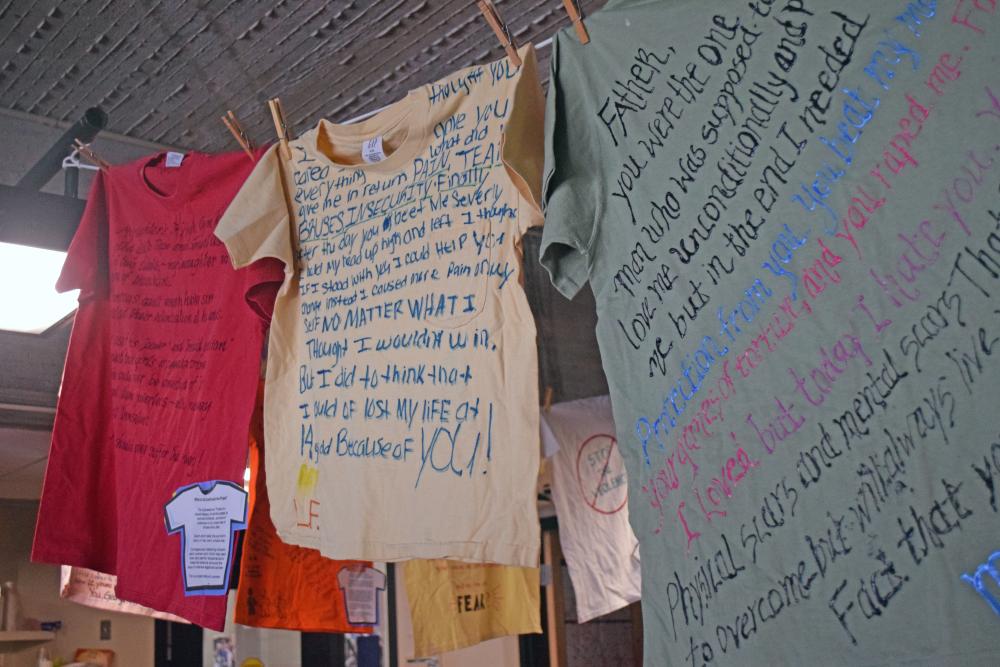 A number of the shirts that students could view at the Center for Women, Gender and Sexuality. Photos by Kat Sheridan
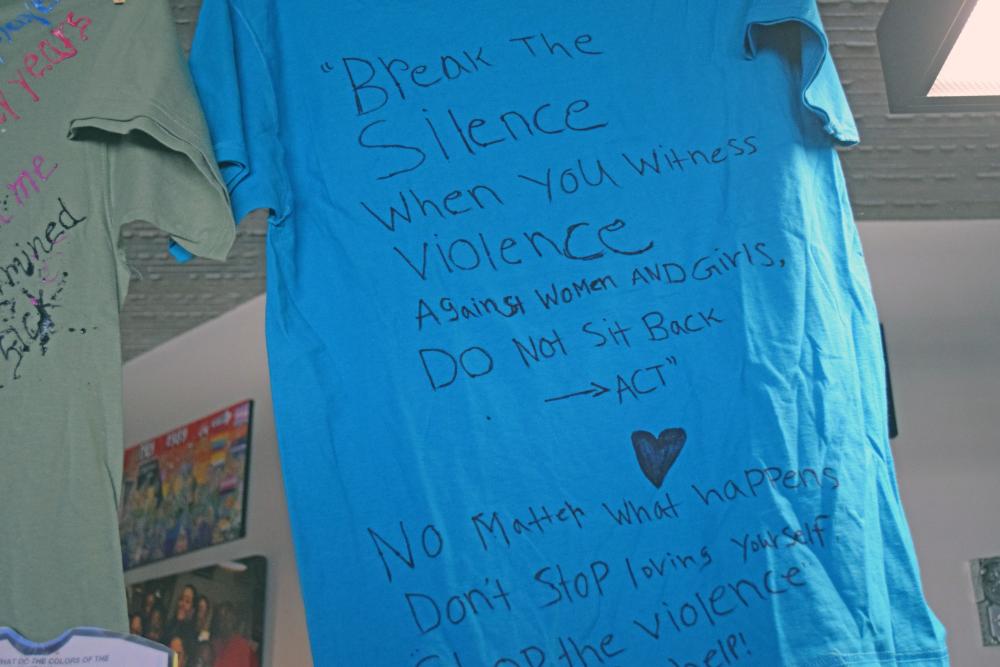 One call for action.
 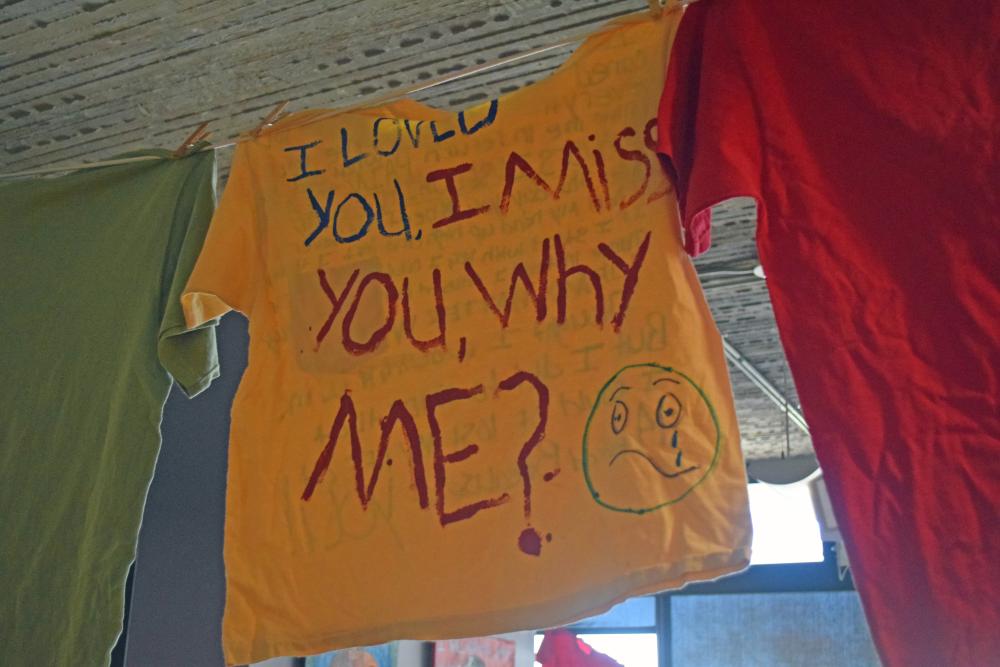 One person wonders why they were targeted.
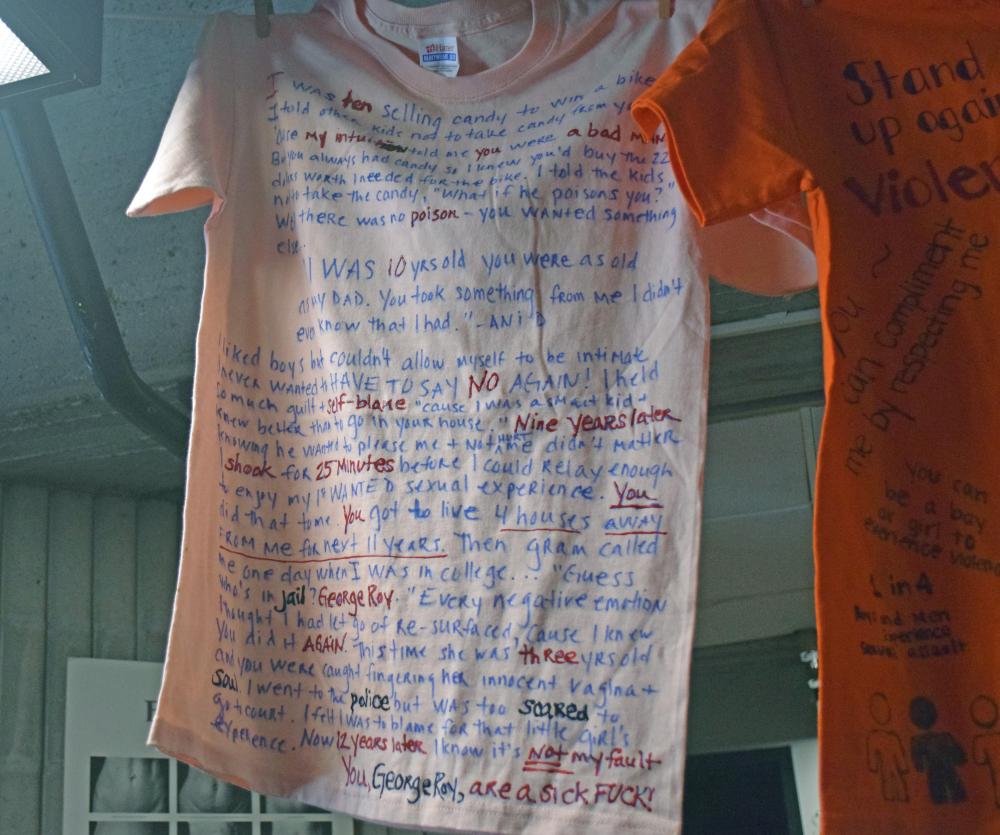 A woman shares her, and another girls, story.
  People question violence.
 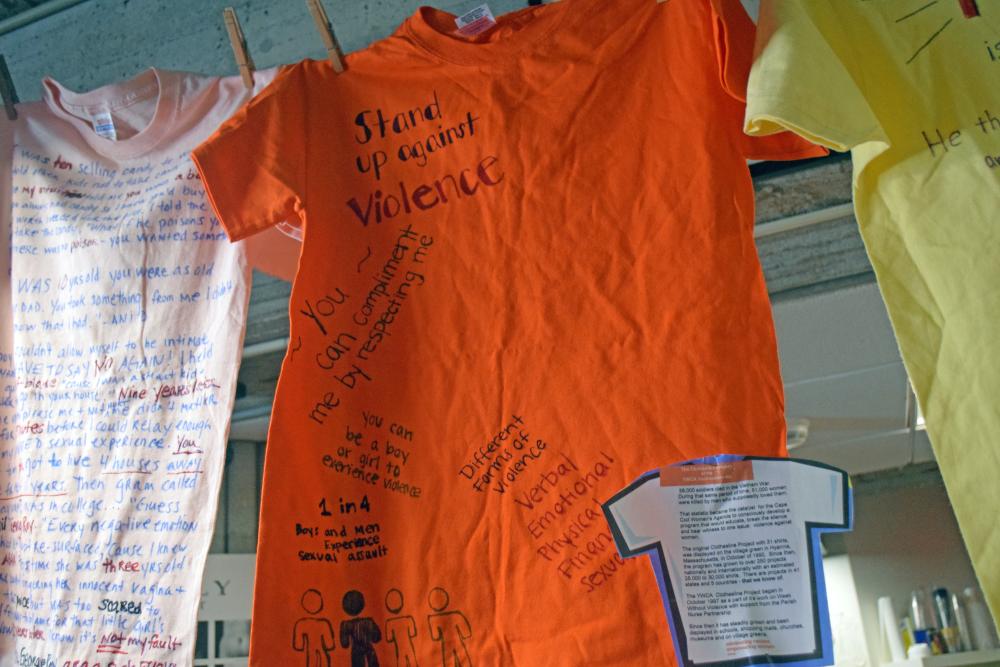 A shirt points out that sexual and domestic violence isn't an issue only women face.
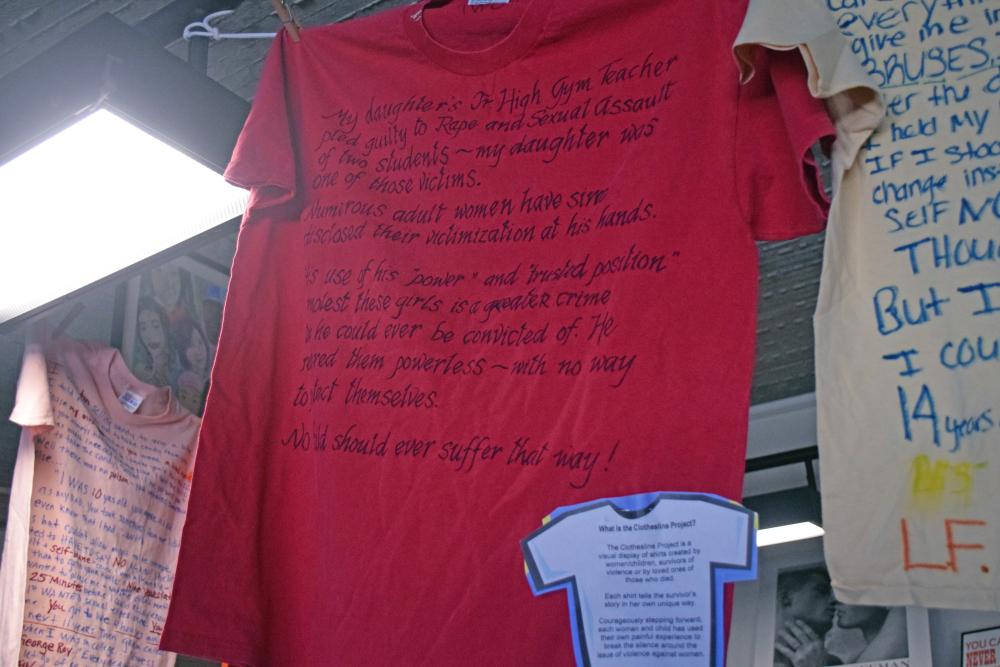 A parent writes their daughter's story.
 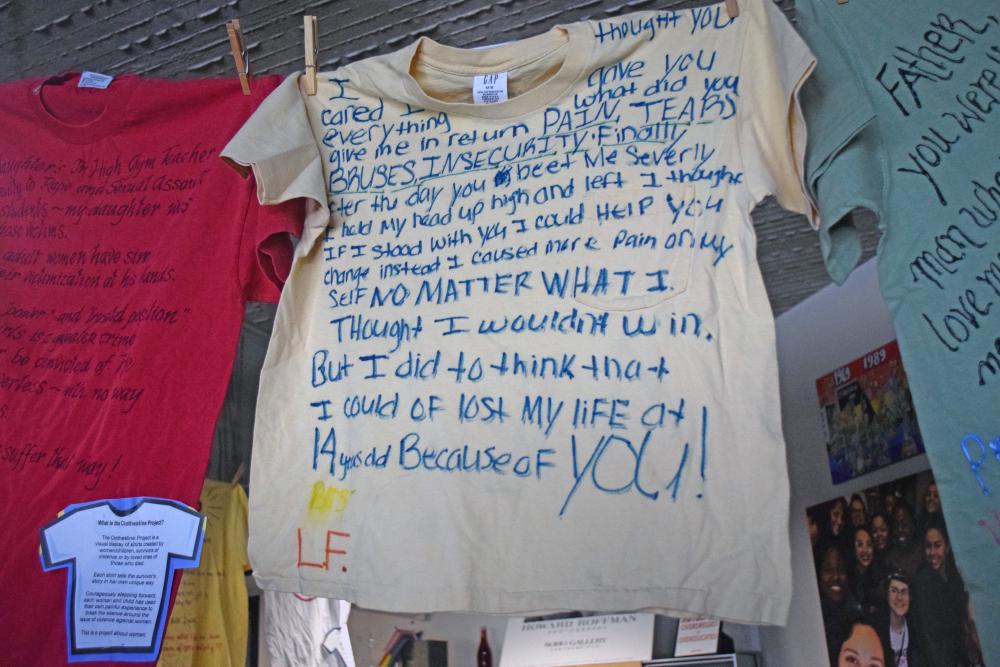 L.F. writes about abuse from their father.
 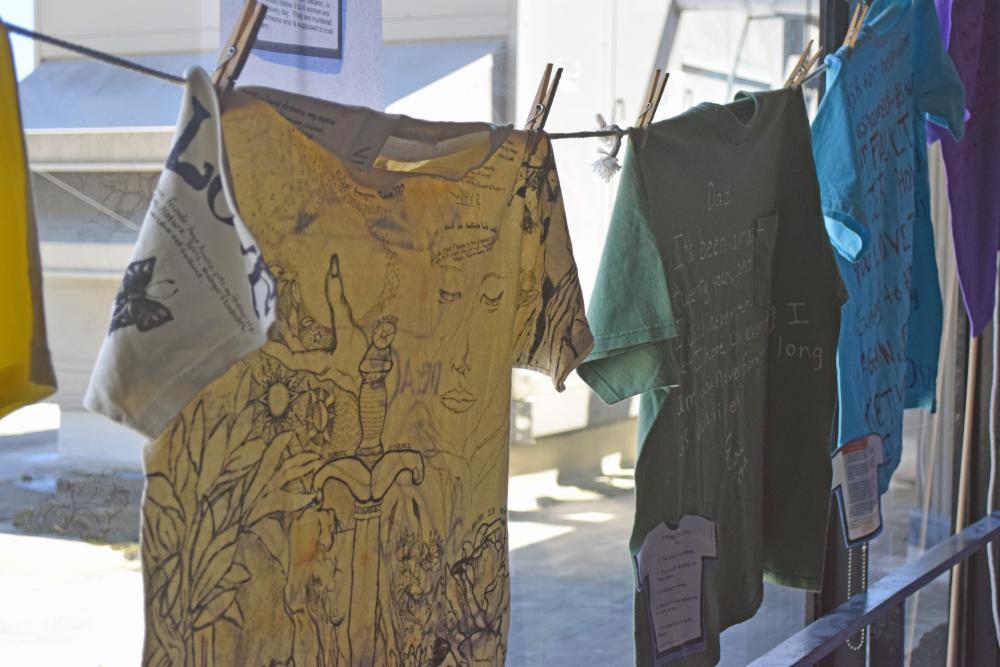 A shirt designed with art.
 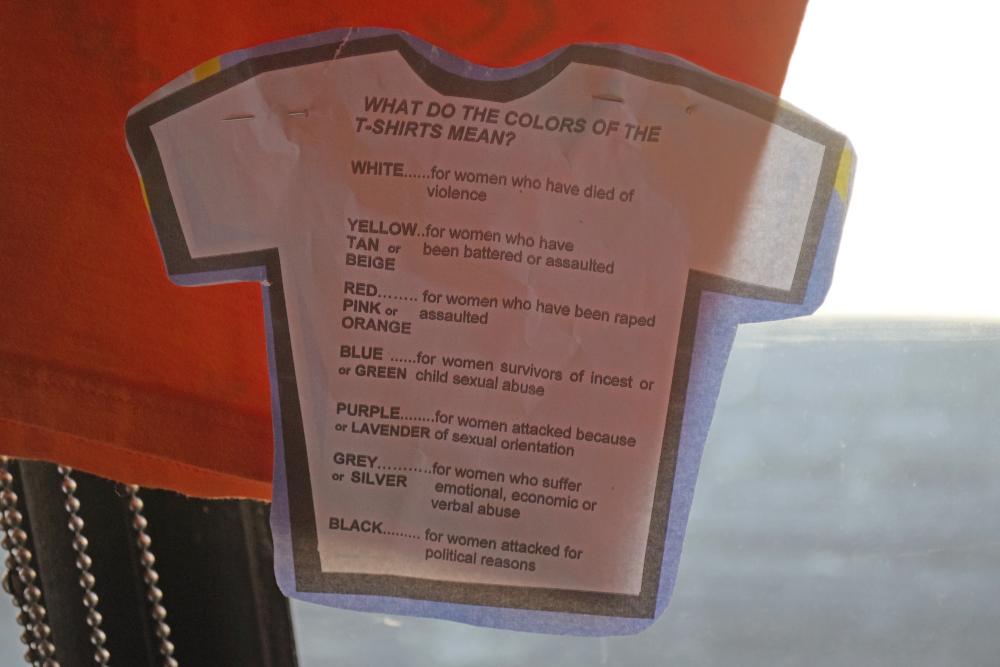 The guide as to what the colors mean.
  A person shares the abuse they faced from their boyfriend.
A number of the shirts that students could view at the Center for Women, Gender and Sexuality. Photos by Kat Sheridan
One call for action.
One person wonders why they were targeted.
A woman shares her, and another girls, story.
People question violence.
A shirt points out that sexual and domestic violence isn't an issue only women face.
A parent writes their daughter's story.
L.F. writes about abuse from their father.
A shirt designed with art.
The guide as to what the colors mean.
A person shares the abuse they faced from their boyfriend.
A person shares the abuse they faced from their boyfriend.
A number of the shirts that students could view at the Center for Women, Gender and Sexuality. Photos by Kat Sheridan
One call for action.
One person wonders why they were targeted.
A woman shares her, and another girls, story.
People question violence.
A shirt points out that sexual and domestic violence isn't an issue only women face.
A parent writes their daughter's story.
L.F. writes about abuse from their father.
A shirt designed with art.
The guide as to what the colors mean.
A person shares the abuse they faced from their boyfriend.
Red, pink and orange shirts representing surviving rape, yellow shirts representing surviving physical assault or domestic violence and white shirts representing someone who didn’t survive violence hung at the Center for Women, Gender and Sexuality UMass Dartmouth. This was a part of their annual Clothesline Project, which was on show from April 6 to April 11.
The Clothesline Project was started in 1990 in Cape Cod to highlight the story of survivors of sexual and relationship abuse. The project has continued to grow, and is now highlighted in towns and colleges around the world.
“Sexual violence and relationship violence are widespread public health issues that I think are often not talked about a lot, something that is often kept quiet,” said Beth-Anne Guthrie, the associate director of the Center for Women, Gender and Sexuality at UMass Dartmouth, “But it’s something that many people experience.”
She added, “I think it’s important to decrease stigma for survivors so that they can access support services for themselves. I also think it’s important for people who may not be survivors, but be people who are in their lives to know how to best support survivors.”
The University has been showing this project for about 20 years now, Guthrie said.
“We decided to bring it to campus in April, because it’s Sexual Assault Awareness Month,” she said.
All of the shirts are anonymous to encourage those who are considering telling their stories to take a step in the healing process.
“I think there’s still a lot of stigma around sexual violence and relationship violence, and so a lot of survivors aren’t necessarily comfortable sharing their experience publically,” said Guthrie, “But it may be a part of their healing process to be allowed to give voice to their experience in some way.”
Every year, UMass Dartmouth receives shirts from the YWCA Southcoast, which has a large collection of shirts.
“It can be very emotional because some of the stories that are shared can be very disturbing,” said Guthrie.
One of the ones that stood out to Guthrie was the story of a child who was sexually abused by her father throughout her childhood.
Another story was of a girl who was raped by her neighbor throughout her childhood, and found out when she was an adult that he was arrested for raping a 3-year-old.
Guthrie pointed to statistics on rape and domestic violence as to why showing projects like this are important; 20%-25% of undergraduate women experience sexual assault or attempted sexual assault, one in six men are sexually assaulted in college, one in three teens will facephysical, sexual or domestic abuse before they become an adult. The rates are often higher for members of the LGBTQ+ community.
“We want to offer meaningful ways for students to learn about these things,” said Guthrie, “And also for survivors to give voice to their experiences.”