











UMass Dartmouth receives $1.1 million for green upgrades
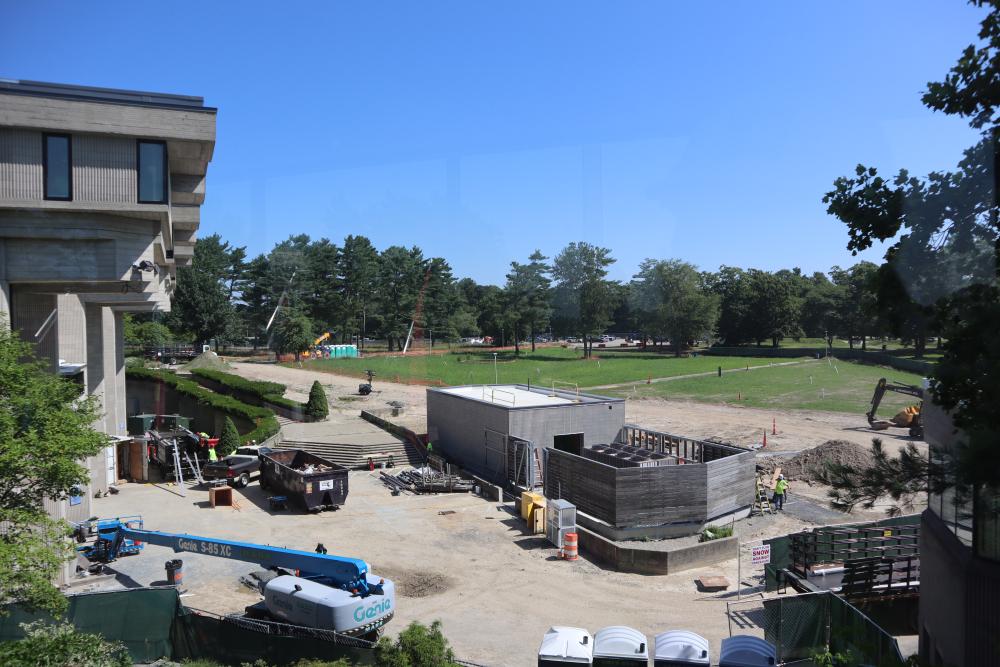 Where the geothermal tanks are buried. Photos by Kat Sheridan
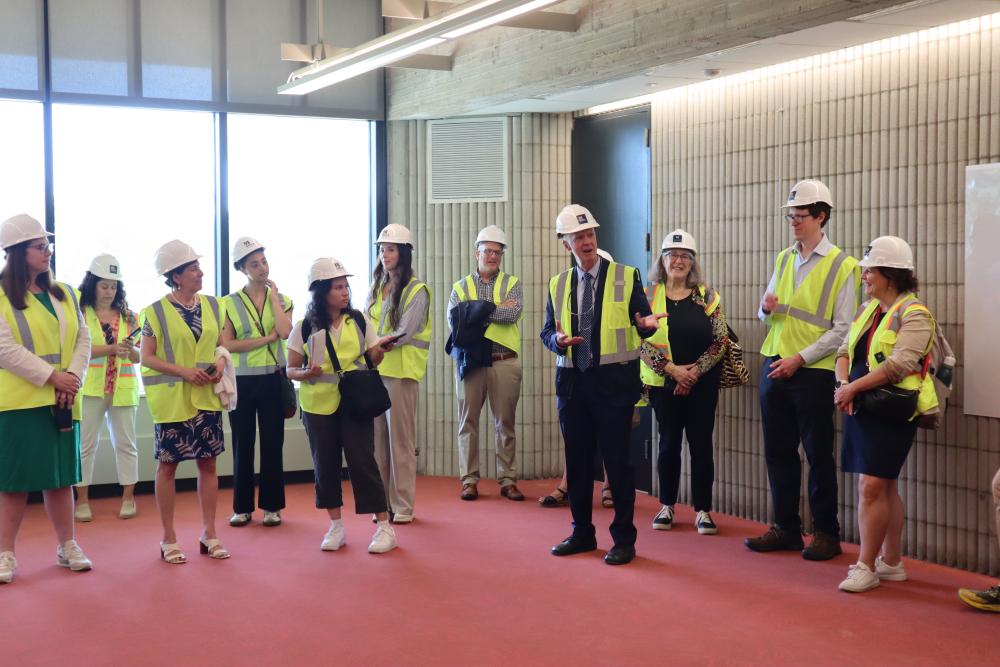 The guests explore a finished classroom, without the furniture placed in.
  The building is still under construction.
  Mark Fuller and a guest tour the Liberal Arts building.
  Michael Kearns, Associate Vice Chancellor, Facilities Management, UMass Boston; Ray Jackson, Assistant Vice Chancellor, Facilities Management, UMass Amherst officials; Elizabeth Mahony, Commissioner, Massachusetts Department of Energy Resources; UMass Dartmouth Chancellor Mark A. Fuller; Secretary Rebecca Tepper, Executive Office of Energy and Environmental Affairs; Adam Baacke, Commissioner, Division of Capital Asset Management and Maintenance (DCAMM.)
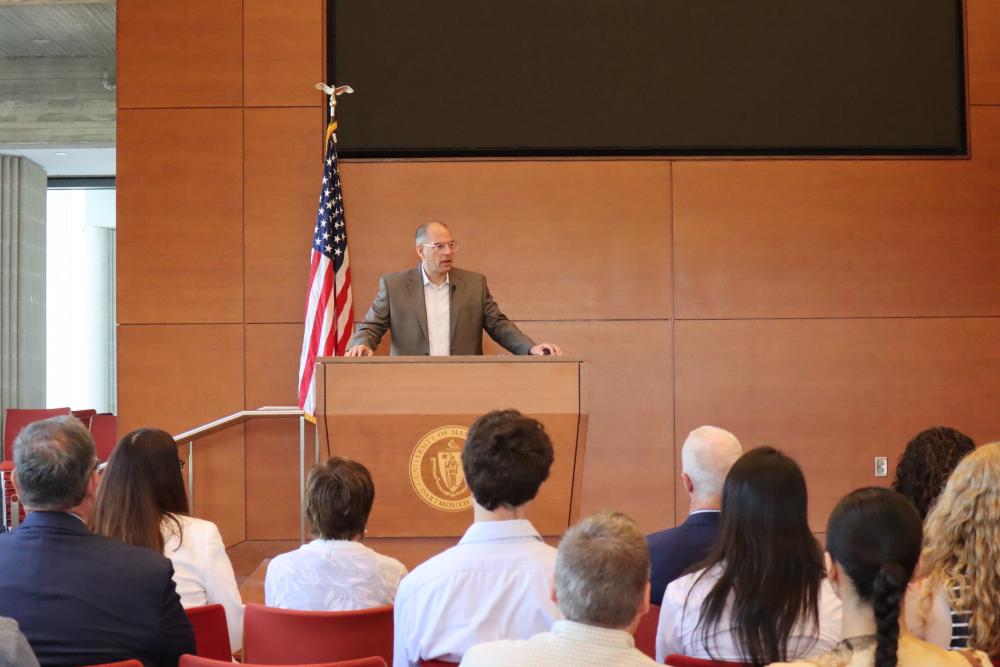 Adam Baacke, the Commissioner of the Division of Capital Asset Management & Maintenance.
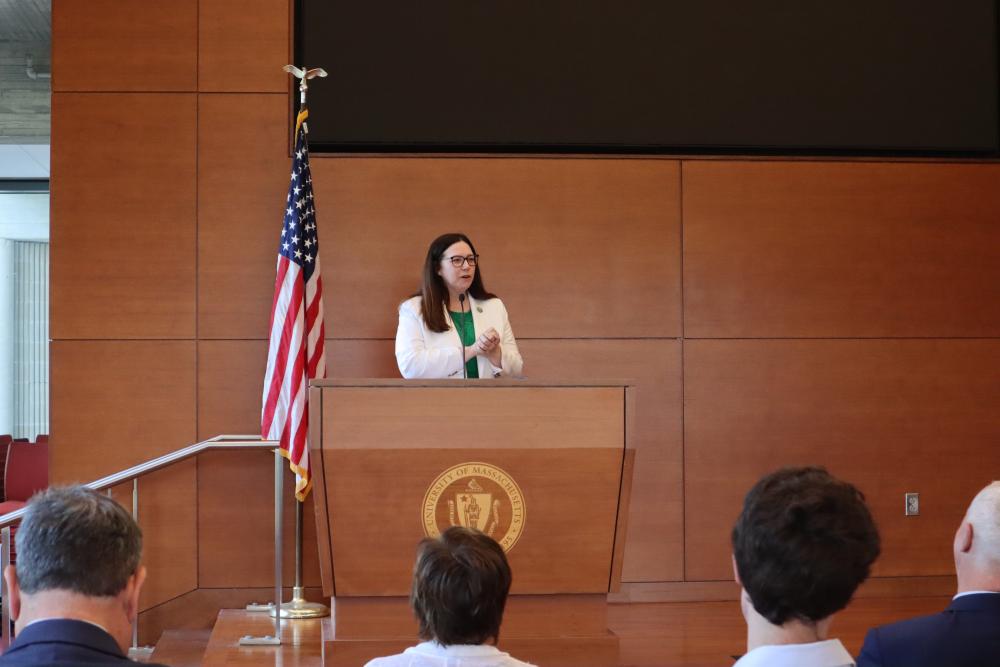 Elizabeth Mahoney, the commissioner of the Department of Energy Resources.
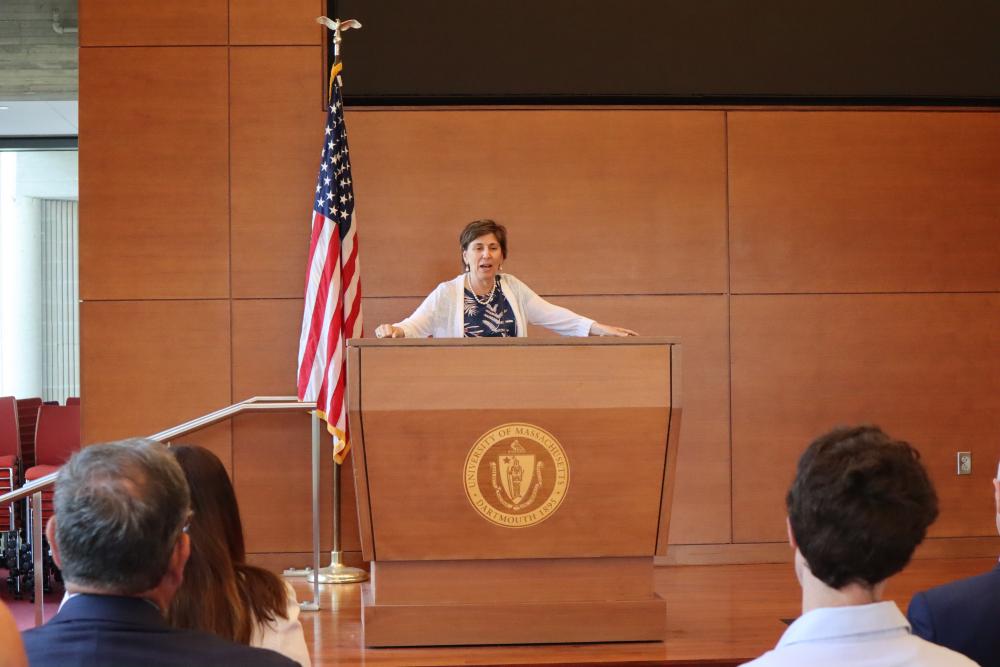 Rebecca Tepper, Secretary of the Department of Energy Resources.
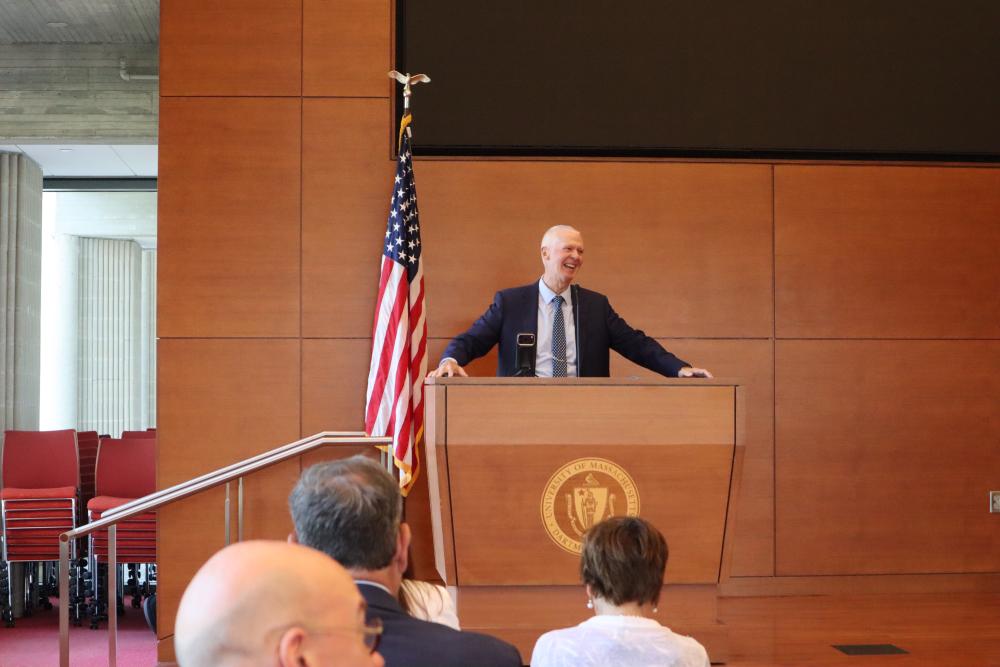 Chancellor Mark Fuller.
Where the geothermal tanks are buried. Photos by Kat Sheridan
The guests explore a finished classroom, without the furniture placed in.
The building is still under construction.
Mark Fuller and a guest tour the Liberal Arts building.
Michael Kearns, Associate Vice Chancellor, Facilities Management, UMass Boston; Ray Jackson, Assistant Vice Chancellor, Facilities Management, UMass Amherst officials; Elizabeth Mahony, Commissioner, Massachusetts Department of Energy Resources; UMass Dartmouth Chancellor Mark A. Fuller; Secretary Rebecca Tepper, Executive Office of Energy and Environmental Affairs; Adam Baacke, Commissioner, Division of Capital Asset Management and Maintenance (DCAMM.)
Adam Baacke, the Commissioner of the Division of Capital Asset Management & Maintenance.
Elizabeth Mahoney, the commissioner of the Department of Energy Resources.
Rebecca Tepper, Secretary of the Department of Energy Resources.
Chancellor Mark Fuller.
Chancellor Mark Fuller.
Where the geothermal tanks are buried. Photos by Kat Sheridan
The guests explore a finished classroom, without the furniture placed in.
The building is still under construction.
Mark Fuller and a guest tour the Liberal Arts building.
Michael Kearns, Associate Vice Chancellor, Facilities Management, UMass Boston; Ray Jackson, Assistant Vice Chancellor, Facilities Management, UMass Amherst officials; Elizabeth Mahony, Commissioner, Massachusetts Department of Energy Resources; UMass Dartmouth Chancellor Mark A. Fuller; Secretary Rebecca Tepper, Executive Office of Energy and Environmental Affairs; Adam Baacke, Commissioner, Division of Capital Asset Management and Maintenance (DCAMM.)
Adam Baacke, the Commissioner of the Division of Capital Asset Management & Maintenance.
Elizabeth Mahoney, the commissioner of the Department of Energy Resources.
Rebecca Tepper, Secretary of the Department of Energy Resources.
Chancellor Mark Fuller.
Since the spring 2025 semester, UMass Dartmouth has been working on renovating the Liberal Arts and Sciences Building, which includes replacing the previous heating system with a geothermal energy system.
The university recently received a $1.1 million grant from the Massachusetts Department of Energy Resources to help cover costs and complete the project.
In a geothermal energy system, naturally occurring underground reservoirs of hot water or the stable temperature of the subsurface can be used to heat and cool buildings according to the U.S. Department of Energy. UMass Dartmouth recently installed 50 geothermal tanks, which are located 650-feet underground to access the water.
With the grant money, UMass Dartmouth will be able to implement a planned connection between the Liberal Arts and Sciences Building ground-source heat pump system and the university’s main auditorium, which is located in the MacLean Campus Center.
This new system will provide 11% of the Liberal Arts and Sciences Building’s cooling needs and 39% of the auditorium’s heating, as well as reduce the amount of fossil fuels the university emits.
UMass Dartmouth began implementing the geothermal energy system with the help of grants from MassSave and tax credits from the federal government.
One key factor in renovating the Liberal Arts and Sciences Building is preserving its historical character while also making it more accessible and green.
Built in the 1970s by architect Paul Rudolph in the brutalist style, most students take at least one course in the building and the majority of staff members have offices in the building.
“Our exploration of geothermal energy … proved that historic buildings can meet today’s environmental standard — not despite their character, [but] alongside it,” Chancellor Mark Fuller said.
UMass Dartmouth received this grant from the Department of Energy Resources at a time when the department is in the middle of supporting public colleges and state facilities with projects that will replace fossil fuel systems with clean energy technologies.
In total, the department is giving $23 million to support nine large-scale projects across the state.
These nine projects are expected to reduce greenhouse gas emissions by approximately 625,000 metric tons in their lifetimes. This would be equivalent to driving roughly 145,000 gas-powered cars for one year.
Contact Name