











For 'safety and unity': Dartmouth Mall implements age restrictions
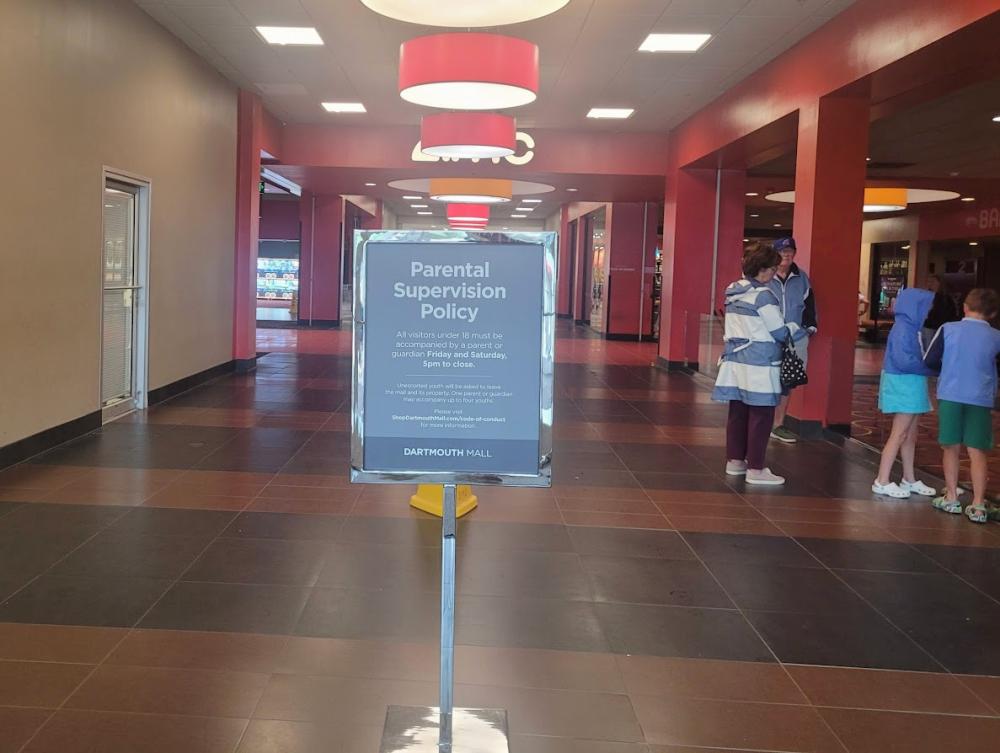 A sign in the mall near AMC Theatres lets shoppers know about the new policy. Photos by Abby Van Selous
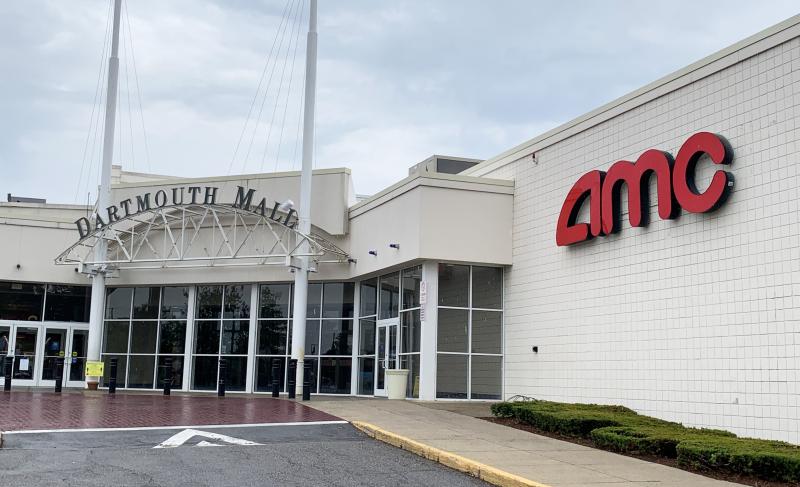 File photo.
 Signs are also posted on Dartmouth Mall entrances.
 Five Below from the bus stop.
A sign in the mall near AMC Theatres lets shoppers know about the new policy. Photos by Abby Van Selous
File photo.
Signs are also posted on Dartmouth Mall entrances.
Five Below from the bus stop.
Five Below from the bus stop.
A sign in the mall near AMC Theatres lets shoppers know about the new policy. Photos by Abby Van Selous
File photo.
Signs are also posted on Dartmouth Mall entrances.
Five Below from the bus stop.
At the Dartmouth Mall, it’s not uncommon to see groups of teenagers popping in and out of stores like Five Below, Journeys or Hot Topic, grabbing a snack at Cinnabon or catching a movie at AMC.
But as of Friday, July 3, the mall experience for these teens and other kids under 18 looks a little different. On Friday and Saturday evenings, the mall is implementing a Parental Supervision Policy that will require kids to be with a supervising adult who is at least 21-years-old.
This policy begins at 5 p.m. both days and ends when the mall closes those evenings.
According to a mall spokesperson, this policy was created in response to concerns raised by shoppers about “unsupervised minors gathering in large groups, which can sometimes disrupt the shopping experience.”
The spokesperson said that the policy is designed to align with the mall’s peak hours and to “maintain the comfortable, family-friendly atmosphere that our guests expect.”
While many teenagers visit the mall to simply shop or hang out with friends, some stores aimed at teenagers and young adults also experience theft.
Employees at one of the mall’s stores whose shopping demographic leans toward young people said that in the summer, there are weekly thefts at their store and that they have had to call the Dartmouth Police on a number of occasions.
At Five Below, located across the street from the bus stop, thefts happen almost daily, according to Five Below manager Madeline Knowles.
“Being located where we are, it’s easy for kids to just come in,” she said. “Then they catch the bus right after.”
Since Five Below has an exterior entrance, is near the parking lot and isn’t surrounded by other stores, employees like Knowles have seen “a lot of stuff that happens outside of the mall, or sometimes even inside of it.”
“We’ve seen fights before, people fought in our store before,” she said.
This includes a June 2024 stabbing that occurred outside the store involving a 16-year-old from New Bedford and a 16-year-old from Fall River.
Knowles, who is 18, said she can look at the policy from both the lens of a worker and the perspective of a young person.
“As someone who enjoys going to the mall, I do kind of feel bad for a lot of those kids,” she said. “The best time to go to the mall’s right at night. That’s peak — you get your friends, you maybe go to AMC after.”
Knowles noted that teenagers and kids do noticeably contribute a large percentage to Five Below’s sales metrics.
“That rush of teenagers right around 8, 8:30 [p.m.] really boosts us for the day, and it can be a make or break from a sales point of view,” she said.
She said that she is “definitely mixed” on the policy because on one hand teenagers and kids bring a lot to the business but noted that it may also help keep the store “clean and calm.”
Some mall employees also see the policy as a matter of safety for everyone, including kids who may have previously shopped alone.
One employee noted that she wouldn’t want her kids to walk around the mall alone and that the policy could make the shopping experience “feel safer.”
She said the policy could be justification for teenagers who may have already been shopping with their parents or a guardian, noting that it would bring kids to the “same playing field.”
This employee and her co-worker agreed that the policy could also bring families together, as adults could learn more about their kids based on what they would like to buy, like clothing or comic books.
The employee’s co-worker said she hopes the policy achieves “safety and unity.”
To enforce the policy, security personnel will be checking IDs at the entrances and around the mall when it’s not clear how old a teenager or supervising adult is.
Minors who are found without a parent or guardian will be asked to leave or to join a supervising adult, the spokesperson said.
“Repeat violations may result in further action, including being banned from the mall,” the spokesperson said.
Knowles said that she hopes the policy does “everything that they want it to, and that the negative side of it doesn’t really outweigh the positives.”
She added, “At the end of the day, what are we making policies for if not to benefit the general public and personal well-being?”