











To the Editor: Regarding the Russells Mills Historic District controversy
To the Editor,
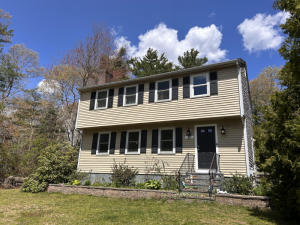
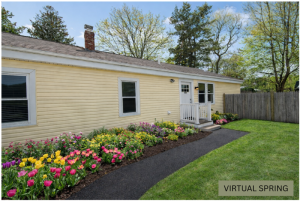
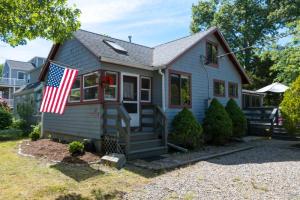
The Russells Mills village historic district is an important and unique asset of Dartmouth. The village is believed to be the first colonial settlement in the town. Located at the head of the Slocum River, there were once eleven water mills and served as a shipbuilding site. In the 19 th century it had merchant shops, workshops, an inn, and a stagecoach stop. Today the millpond, dam and falls, the Davolls store, a partly restored mill just outside of the village, and many historic houses, are all reminders of its historic importance. The current controversy is over the proposal by Buzzard Bay Coalition to build a small park and remove or demolish the house on 4 Tannery Lane, a name that is a reminder of the property’s historical use.
During the 1990s the Dartmouth Historical Society attempted to establish an Historical District in Padanaram in order to preserve historical houses, but the residents voted against this effort. People in Russells Mills village, members of the Historical Commission, led by Michael Woyciehouski, succeeded in creating the Russells Mills Historical District in 1998. I participated in the project and served on its Board until I was removed by the Dartmouth Select Board on June 8, 2026, as a consequence of my actions and those of three other RMHDC members of our attempts to get the town to enforce our April 21 decision to deny a permit to the Buzzard Bay Coalition to remove or demolish the house at 4 Tannery Lane. By June 8, the Select Board had removed these four RMHDC members. Another member resigned, which leaves two members, who were alternates, on the Commission. Since the RMHDC requires three members for a quorum, the Commission cannot meet. The result is that there is now no protection for the Historical District.
How did this happen? It is a complicated story. There was a full discussion at the hearing of the BBC’s petition to remove the house on April 21. There was much discussion of BBC’s plans for a public park, but the RMHDC only voted 4 to 1 on the removal of the house. Its decision focused on the preservation of the house and its historical importance in the village. The BBC’s plans depended on the allocation of more than a half million dollars from the town’s Preservation fund that would be voted on at the June 2 nd town meeting. On April 22 nd the chairperson of the RMHDC filed our decision with the town Building Department, where the RMHDC had submitted its decisions for many years.
On May 20, the Town Clerk announced that it had not received the RMHDC’s determination. Unfortunately, no one, including the Building Department, told the RMHDC that its decisions now had to be filed with the Town Clerk. On May 26, the RMHDC filed its decision with the Town Clerk. The next day we learned that our filing with the Town Clerk was now too late. During the next few days, the RMHDC attempted but failed to reach the Town counsel to make sure that our filing would be enforced since the Town Meeting was on June 2 nd . RMHDC members were now very anxious about the validity of our decision. Our anxiety was enhanced by the Building Department wrongly issuing a permit last year to someone in the Historic District that placed solar panels on their very visible roof. The RMHDC only learned about this when the panels appeared on the roof. After a hearing that denied the placing of solar panels on the roof, it took the RMHDC months of effort to convince the town to enforce its decision to remove the panels.
On Friday evening, May 29, a member of the RMHDC filed a complaint with the Superior Court in New Bedford, with support from two other members and myself, to preserve the RMHDC decision to prevent the removal of the house. On Monday, June 1, the Select Board removed the filer of the complaint from the Commission. The next day the Town Meeting voted to provide the funds to the BBC.
On the morning of June 8, two members of the RMHDC and myself met for an emergency scheduled public meeting at the town hall to consider another court filing. The town manger and town counsel attended the meeting and told us that our meeting was illegal, since in their view there was no emergency, and thus our meeting was illegal. If we persisted with the meeting, they would report us to the Attorney General. Since we would have had to pay our own legal expense, we abandoned the meeting. At 4:00 the Select Board met and voted to remove us from the RMHDC. The charges against us were violating public meeting laws, and for the three who live in the Historic District that they should not have voted since they live near 4 Tannery Lane. The latter is a very problematic charge, since almost everyone in the Russels Mills Historic District lives close to the property in question.
I came to Dartmouth in 1972 as a young historian to teach at SMU and retired from UMass Dartmouth in 2010 as an Emeritus Professor. History has taught me that it is sometimes necessary to disobey regulations if those regulations are unjust and prevent a greater good.
Gerard Koot
417 Gulf Road West
Dartmouth, MA