











Study shows Gooseberry Causeway doesn't influence beaches, water quality in Buzzards Bay
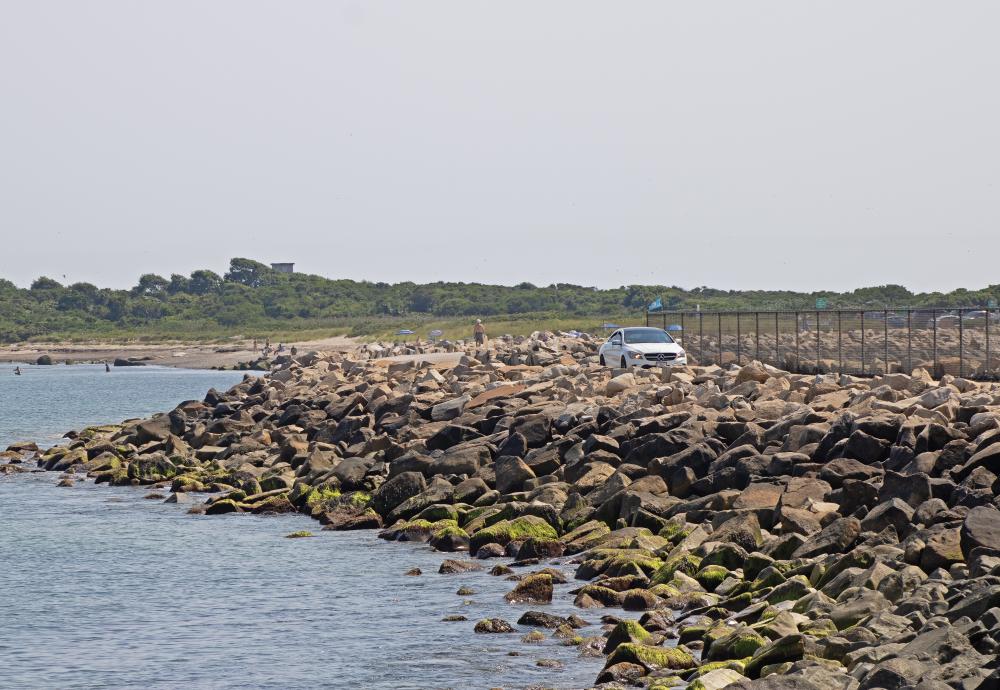 The Gooseberry Causeway leading to Gooseberry Island. Photo by Abby Van Selous
The Gooseberry Causeway leading to Gooseberry Island. Photo by Abby Van Selous
The Gooseberry Causeway leading to Gooseberry Island. Photo by Abby Van Selous
A recent study published by the Buzzards Bay Coalition revealed that the Gooseberry Causeway has no impact on the beaches and water quality of Buzzards Bay between the Westport and Slocums Rivers.
The Gooseberry Causeway connects Gooseberry Island in Westport to the mainland and was built in the early 1940s out of concrete and boulders.
Prior to the construction of the causeway, people could get to Gooseberry Island via a sandbar they could walk across during low tide.
Rachcel Jakuba, the vice president for bay science at the Buzzards Bay Coalition, said that the causeway disrupts water flow that used to go over the sandbar.
“On a windy day, the water and waves will be much choppier on one side than the other,” she said. “Just visually, you can tell that the causeway is influencing water flow.”
Jakuba said that the purpose of the study was to address whether the Gooseberry Causeway is doing more than influencing water flow and if it's also moving sand into the Westport and Slocums Rivers and harming the rivers’ water quality.
Between “massive erosion” of East Beach in Westport and sand being deposited in the mouth of the Slocums River, there has been a “natural inclination” for town residents to say the causeway is a driver of the changes and that it should potentially be removed, Jakuba said.
The study looked to answer three questions: is the causeway influencing the cycle of inlet closure to Allens Pond; what’s causing sand to be deposited into the Slocums River and is this sand degrading water quality; and what role climate change is potentially playing.
“The most important result is that the causeway is not at the root of these problems,” Jakuba said.
The study began in the summer of 2022 when researchers started collecting data between Little Beach and Mishaum Point. This included gathering information along coastal sand dunes and interior marshes, collecting underwater sediments and measuring currents and wave conditions.
Water often enters Allens Pond on an incoming tide faster than it can drain out, bringing in more sediment over time that can cause the inlet to close, trapping in water that can drown the salt marsh plants.
The study determined that the Gooseberry Causeway doesn’t influence how much water enters the pond during high tide or how often the inlet closes.
Jakuba noted that the “main driver” is instead whether enough water is getting in.
“If you have enough water getting in, then you basically have this kind of big head of water that needs to get out and keeps the inlet open,” she said.
When it comes to sand being deposited into the Slocums River, the study found that the majority of the sand comes from offshore, Little Beach, Barneys Joy Beach and storms that push sand in.
“The currents that get set up by the causeway sort of come offshore before Barney’s Joy Point, and so they don’t push sand up around into the Slocums River,” Jakuba said.
The study also determined that the Gooseberry Causeway won’t alter or worsen the effects of climate change.
Large storm events that can wash sand into the mouth of the Slocums River and into Allens Pond will likely be more frequent and intense with climate change, no matter whether the Gooseberry Causeway exists, the study showed. These storms would lead to more sand being deposited into the river mouths and marshes.
Jakuba said that while sea level rise will cause salt marshes to drown over time, this will allow more water to get in at high tide to help keep the inlet open.
She noted that climate change won’t make solving the problems Buzzards Bay faces any easier and that the next step is to have a coastal engineering firm look to see if there are ways to improve water quality, such as dredging the sandbars at the mouth of the Slocums River.