











Sherbrooke Farms traffic, civil and environmental concerns discussed at Zoning Board meeting
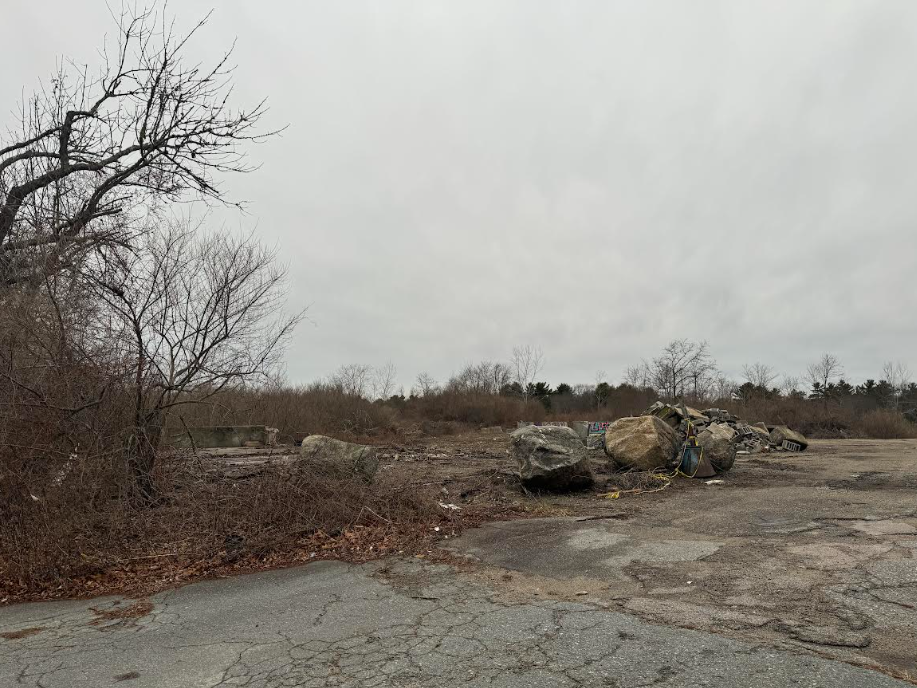 Part of the Sherbrooke Farms land. Photos by Kat Sheridan
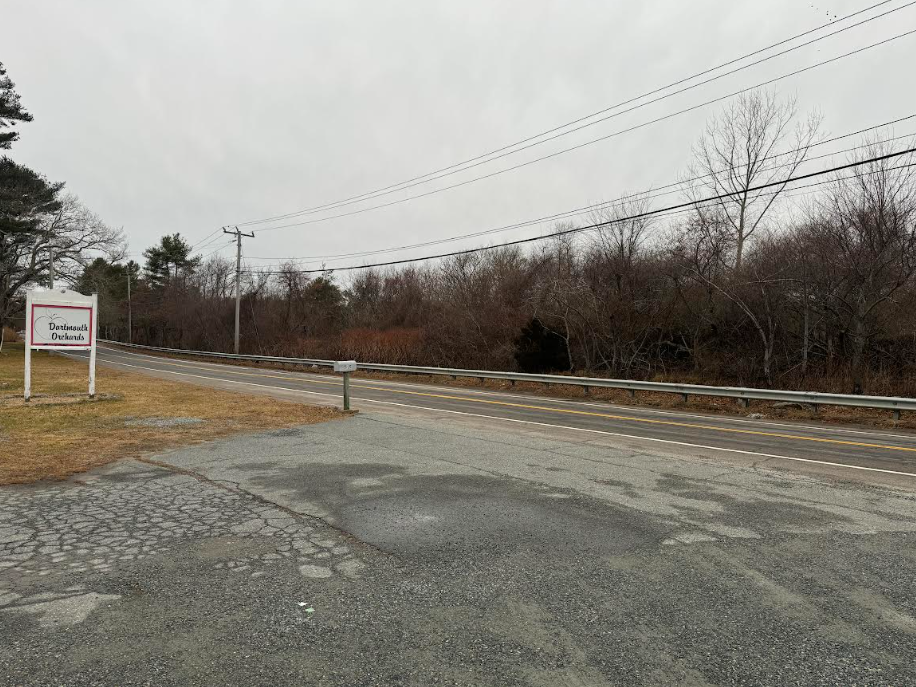 Part of the land where Sherbrooke Farms would be built, as seen from Dartmouth Orchard.
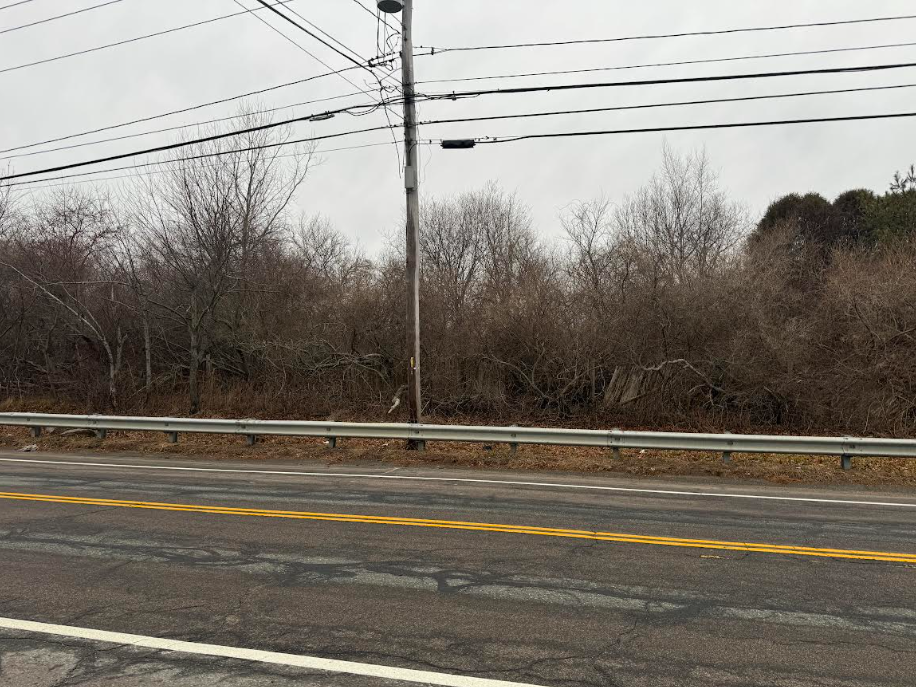 A street view of where Sherbrooke Farms would be built.
Part of the Sherbrooke Farms land. Photos by Kat Sheridan
Part of the land where Sherbrooke Farms would be built, as seen from Dartmouth Orchard.
A street view of where Sherbrooke Farms would be built.
A street view of where Sherbrooke Farms would be built.
Part of the Sherbrooke Farms land. Photos by Kat Sheridan
Part of the land where Sherbrooke Farms would be built, as seen from Dartmouth Orchard.
A street view of where Sherbrooke Farms would be built.
The petitioners for Sherbrooke Farms granted the Zoning Board of Appeals an extension on their application decision, giving them until May 14 to have public meetings about the 40B apartment building application.
Sherbrooke Farms would have 156 units and is proposed to be built at 498 Old Westport Road. This would be a 40B project, which allows the developers to bypass certain zoning laws if at least 25% of the property is deemed affordable.
During the Thursday, Jan. 22 meeting, the engineers for Sherbrooke Farms presented information on a recent traffic study, civil matters and environmental cleanup.
Stephen Siragusa, the project manager, stated that they conducted a new traffic study with a wider scope. The initial study done in 2024 only studied the impact on Old Westport Road. The new one, conducted on a Tuesday and Wednesday in November 2025 while school was in session, included Old Westport Road, Lucy Little Road, Morton Ave, Cross Road and Ring Road at UMass Dartmouth.
They found that there would only be a 5% increase in traffic from Sherbrooke Farms onto Old Westport Road, and there were no significant safety concerns.
To decrease single resident trips, they are hoping to have a shuttle. While they have not decisively stated where the shuttle would travel to, some ideas included UMass Dartmouth and the SRTA terminal in New Bedford.
They would also be conducting a traffic review six to 12 months after people move into the finished apartments, to see how the apartments affected traffic flow and whether there are any issues they can address.
The biggest concern raised during public comment was the number of parking spaces. There would be 267 parking spaces, or 1.5 spots per unit. With the current plans, there would be 264 bedrooms.
Siragusa explained they decided on 267 parking spaces based on research done by the Institute of Engineers, which states that 1.5 spots per unit is more than enough.
Concerns with this are plans for people parking on the streets and guest parking. The Zoning Board agreed to add an addendum that "No Parking" signs would be posted on Old Westport Road.
The other issue raised by the public surrounding the parking and traffic study was the study not including areas such as the S-Curve on Lucy Little Road, but Siragusa stated that the area they surveyed was more than necessary to determine traffic impact.
Damien Dmitruk, the principal engineer, reviewed the stormwater plans, which would involve the water being filtered and infused back into the ground.
There were concerns with this being an aquifer district, with two of the wells that Dartmouth gets its drinking water from being nearby. Dmitruk stated that their plans are well within the requirements of the Department of Environmental Protections.
The plan is to collect the stormwater, pre-treat it, allow it to filter and then infuse back into the ground. Dmitruk emphasized that regardless of whatever sediment or trash is collected along with the stormwater, it would be treated and clean by the time it reaches the ground and would be further filtered by the soil.
He also stated there would be a sidewalk to the east of the entrance, toward UMass Dartmouth, but not to the West. Open areas would be available for people to gather and kids to play away from the roads. The petitioner plans to work with the Department of Public Works to figure out dumpster pick up schedules.
Brian Klingler, the environmental scientist, went over the historical contamination of the site. It was used for gravel mining, concrete production and solid waste disposal. The solid waste disposal included demolition debris such as asphalt and bricks, metal debris, car parts, foundry sand and aluminum cans.
Between 1950 and 2018, a number of contaminants were removed— six underground storage tanks; seven aboveground storage tanks and a gas dispenser pump. There was a former septic system and tanks associated with truck washing. Between 2023 and 2025, they found cardboard and an aluminum can.
Coneco Engineers and Scientists have performed soil and water tests. A concentration of petroleum hydrocarbons, a form of carbon found in crude oil, was found near where one of the tankers was buried. They found no further solid waste, no lead and no other minerals besides what is naturally found in soil.
They would monitor and test the site for contaminants during excavation and reduce the petroleum hydrocarbons.
The next Zoning Board meeting for Sherbrooke Farms will be held on Monday, March 9 at 6 p.m. in Town Hall.