











Water and sewer rates, taxes may increase for long-term project funding
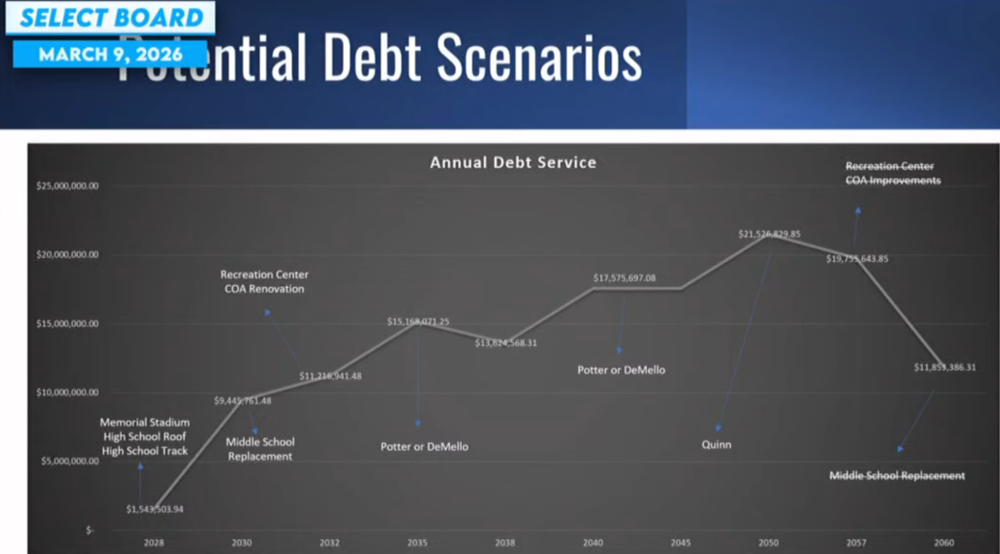 The potential timeline for long-term school projects. Source: Dartmouth Community Media
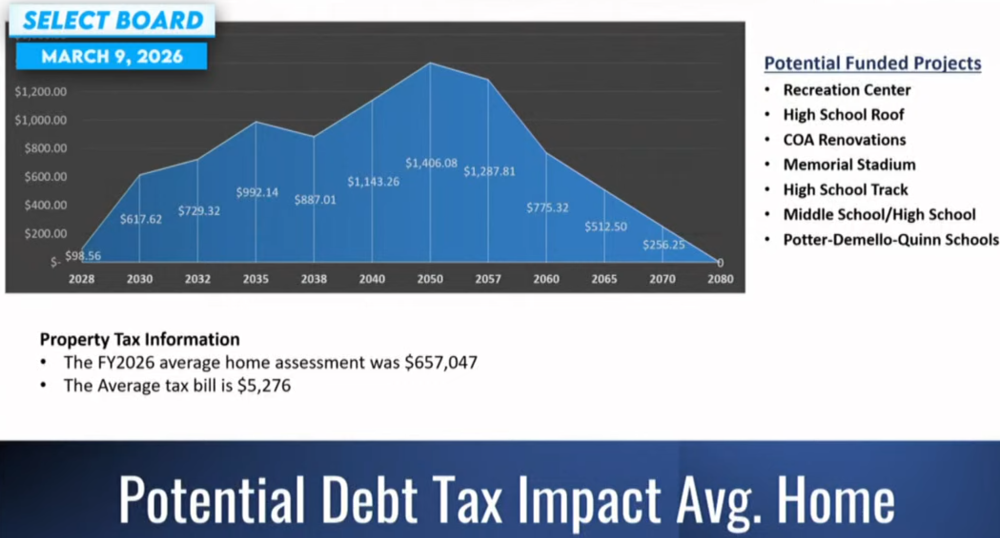 Graph of the ways the tax impact could affect the average home.
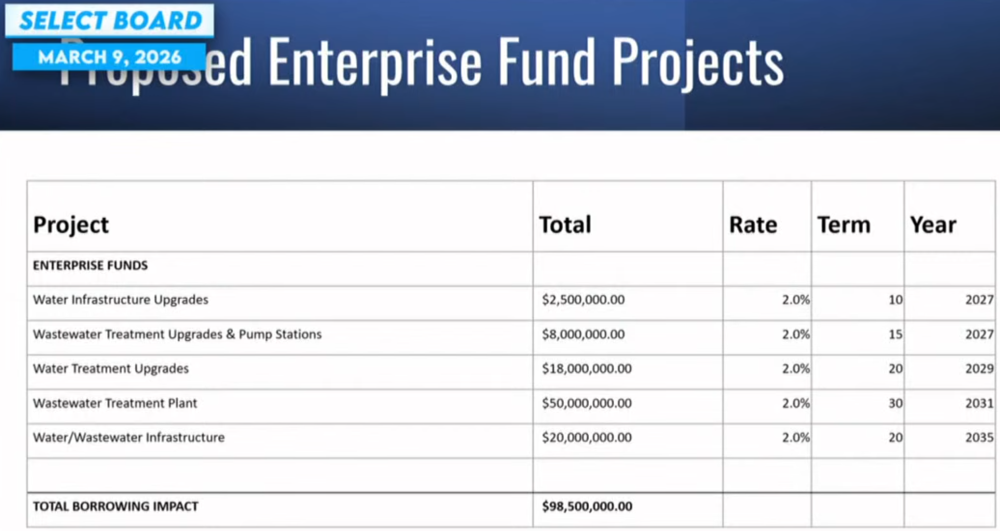 The costs of proposed enterprise fund projects.
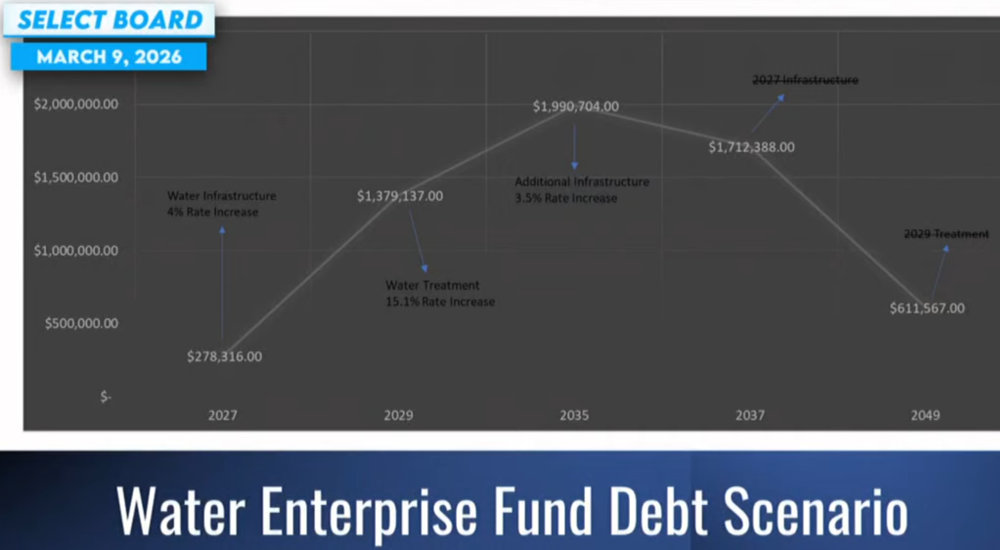 The costs of water enterprise fund debt scenarios and how they would affect water rates.
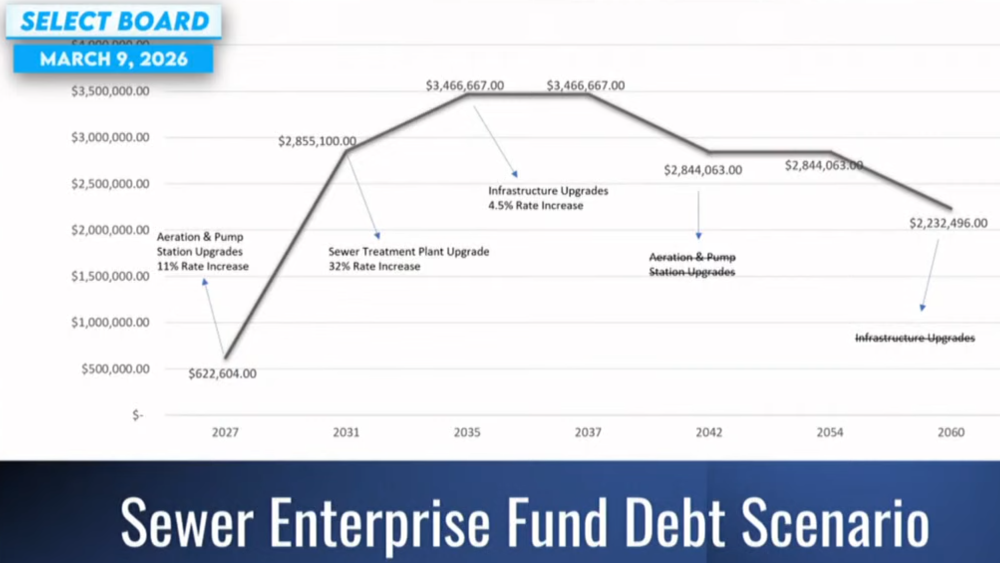 The costs of sewer enterprise fund debt scenarios and how they would affect rates.
The potential timeline for long-term school projects. Source: Dartmouth Community Media
Graph of the ways the tax impact could affect the average home.
The costs of proposed enterprise fund projects.
The costs of water enterprise fund debt scenarios and how they would affect water rates.
The costs of sewer enterprise fund debt scenarios and how they would affect rates.
The costs of sewer enterprise fund debt scenarios and how they would affect rates.
The potential timeline for long-term school projects. Source: Dartmouth Community Media
Graph of the ways the tax impact could affect the average home.
The costs of proposed enterprise fund projects.
The costs of water enterprise fund debt scenarios and how they would affect water rates.
The costs of sewer enterprise fund debt scenarios and how they would affect rates.
The Town of Dartmouth is looking to fund a number of long-term projects that could result in tax, water rate, and sewer rate increases over the next several decades to pay off debt that the projects would accrue.
These projects include school projects like replacing the high school roof and replacing the middle school, repairing or replacing the Padanaram Bridge, upgrading the sewer treatment plant and improving water infrastructure.
The town would take on some state debt to complete these projects, which would be paid partially with enterprise funds and taxes.
“We do need to start, particularly with the enterprise funds, essentially going into this year,” Town Administrator Cody Haddad said at a Select Board meeting on Monday, March 9.
Dartmouth’s residential tax rate is currently $8.03, which Haddad said is lower than in comparable communities where the average is $10.63.
“We could tax another $26.2 million and that would bring our tax rate up to the average of $10.63,” he said.
This money would go toward the long term projects outlined in the long range capital plans.
At the March 9 Select Board meeting Haddad reviewed how water and sewer enterprise rates could change over the course of a decade to fund projects.
Between Fiscal Year 2027 and 2035 these rates would increase in 2027, 2029 and 2035.
Water enterprise rates would increase by 4% in 2027 to cover water infrastructure costs, by 15.1% in 2029 for water treatment costs and by 3.5% in 2035 for additional infrastructure needs.
Sewer enterprise rates would increase by 11% in 2027 for aeration and pump state upgrades, by 32% in 2029 for upgrades to the sewer treatment plant and by 4.5% in 2035 for infrastructure upgrades.
These rate increases would be set by the Department of Public Works and aren’t required to be approved at Town Meeting to go into effect.
Haddad acknowledged that the town is “asking a lot of the community over the next several years” but noted that the proposed projects are ones that are “going to need to be done.”
“We look at current interest rates, current market conditions and we also look at anticipated cost projections increasing,” he said. “We wait, these projects are only going to increase [in price].”
The price for repairs to the high school’s roof for example have increased by about half in the past several years, with the town poised to pay around $6 million for the project. In 2020, the town was looking at $20 million in repairs to the Padanaram Bridge. Now these repairs sit at around $30 million.
“These projects, be it schools, wastewater, sewer, these are essential that will have to happen,” said Select Board member David Tatelbaum, who is also serving on the long range capital planning committee.
He added, “No one wants to spend this kind of money, but we have to.”
Select Board member Chris O’Neil noted that there are a lot of people who are “debt-averse” and pointed out that debt is sometimes necessary to “move on.”
He asked if Haddad could create a breakdown of how much these tax and rate increases would cost residents to give them an indication of how they would be affected.
“What people want to do … from what I hear … is that they would like to treat it the same way they treat their own homes, so they need to know what the impact is,” O’Neil said.