











Inside a once empty building sprouts a place of healing
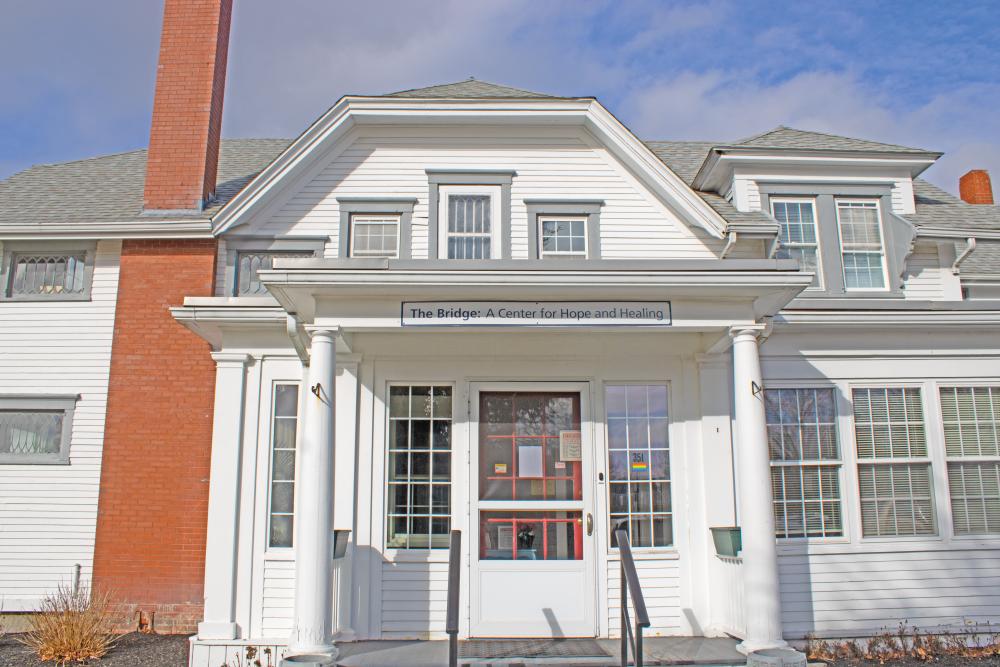 The Bridge: A Center for Hope and Healing is located in Padanaram. Photos by Abby Van Selous
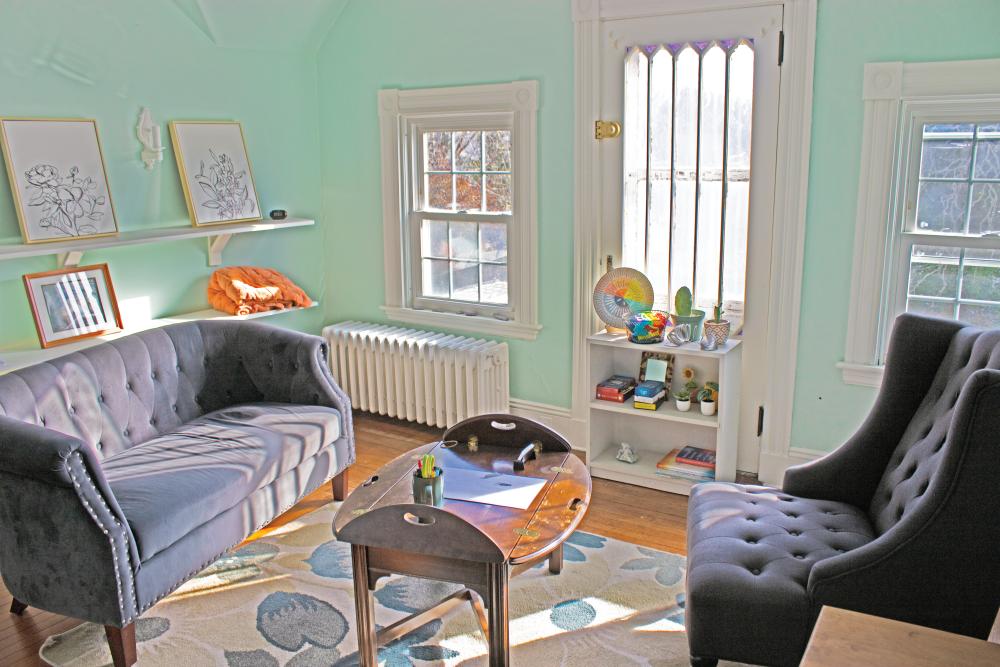 Inside one of the clinician's offices.
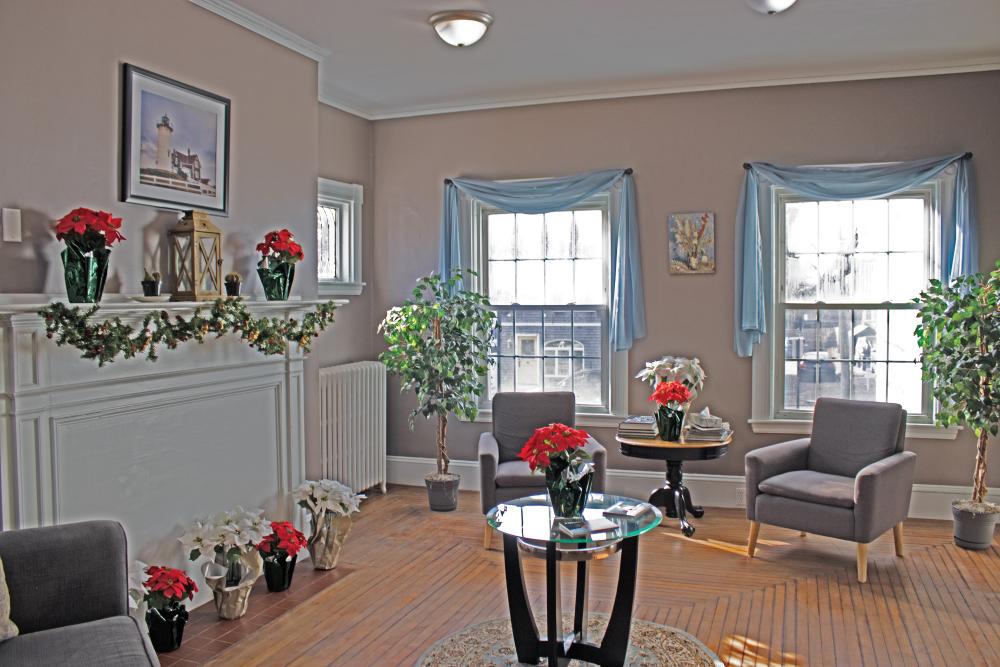 The Bridge's lobby.
The Bridge: A Center for Hope and Healing is located in Padanaram. Photos by Abby Van Selous
Inside one of the clinician's offices.
The Bridge's lobby.
The Bridge's lobby.
The Bridge: A Center for Hope and Healing is located in Padanaram. Photos by Abby Van Selous
Inside one of the clinician's offices.
The Bridge's lobby.
In the summer of 2014, Reverend Scott Ciosek stood in the parking lot of St. Peter’s Episocpal Church in Padanaram and looked up at the night sky after some long meetings.
What he saw was an empty building that wasn’t being used, and it was in that moment that the vision for The Bridge: A Center for Hope and Healing was born.
“How can we use this building to care for people in the community?” Ciosek recalled thinking.
The Bridge opened shortly after with grief support groups. Six months later, three therapists joined the staff.
“From there it’s grown to what we have now,” Ciosek said.
Ciosek noted that it’s difficult to begin a nonprofit “with an empty building and no people.”
“The key to success here has been really drawing amazing clinicians who are not only here to do a job, but they’re dedicated to our mission,” he said.
While The Bridge is located on the campus of St. Peter’s Episcopal Church and was founded on how to love, show compassion and care for people, that is where the association between the church and the organization ends.
“We’re not in any way a Christian counseling center, nor do we in any way force whatever beliefs that may come from that side of the building here,” Ciosek said.
The Bridge clients come from across the South Coast, with a large percentage of them being non-Dartmouth residents, coming from communities like Fall River, New Bedford, Fairhaven and Acushnet.
The Bridge is housed in an old home, with green-trimmed windows and a brick fireplace. Inside, the rooms are made to be home-y, furnished with couches, soft lighting and books.
“We don’t want it to look like an overly sterile, industrial environment,” Ciosek said. “We want it to have more of a home feeling to it where people are nurtured in body, mind and spirit.”
Cassie Perry, a mental health counselor at The Bridge, said that being in an old house helps create an ambiance that is “more quaint, comfy [and] welcoming.”
She said she thinks that the environment someone is in can make “a world of difference.”
“We have some clients who just enjoy being here, and they’ll sit here for like an hour before their appointment,” Perry said.
Each clinician’s room has its own characteristics, decorated in a way to give kids different things to play with and older clients more items to fidget with. Sometimes, the clients can leave as much of an impact on the clinicians as they do with their clients.
Ciosek, while not a clinician, highlighted an experience he had with a client who arrived at The Bridge “[carrying] the weight of the world on his shoulders.”
“Everything that could go wrong in his life went wrong,” he said. The man had walked into the center and looked overwhelmed by life.
Six months after regularly coming in, he knocked on Ciosek’s door and said “I just want you to know that this place saved my life,” Ciosek recalled.
“Within a couple of minutes I came to know that that was very literal — he was being genuine,” he said.
Perry noted that The Bridge isn’t a crisis center but that all the clinicians have been trained and are well-versed in crisis management, prevention and intervention.
Perry said that The Bridge has seen an uptick in patients since the covid-19 pandemic, when people who had the tendency to isolate themselves became even more isolated.
The Bridge is still seeing the effects of covid and how it was detrimental to physical, emotional and psychological wellbeing.
“That disconnect from society, disconnect from one another, lack of ability to engage in meaningful activities … I think the effects of it were all encompassing in a very negative way,” Perry said.
Over the past few years, there’s also been a “huge uptick” in the number of young adult clients.
“Young people … are looking for support in these times of human isolation where people just feel cut off,” Ciosek said.
Perry said that people are being subjected to seeing “things being publicized on TV that we’re not supposed to be seeing as humans,” like war footage and mass shootings. “I think it’s just created so much sorrow and sadness for people,” she said.
Sarah Lake, a clinician at The Bridge, said, “I feel like it’s taken the focus away from the larger values of just being kind, being absolutely generous, being a good human.”
The Bridge has been talking of expanding its services to hosting grief support groups and groups for children, such as summer camp programs and grief support groups throughout the year.
“Offerring some ongoing grief support for youth I think would be really important to me,” Ciosek said.
The holiday season and winter months can be particularly difficult for people, as the holidays can resurface the “loss of people that were once part of our lives,” Ciosek said.
Perry noted that grief isn’t something that fully goes away, creating a void that will always exist. “It’s not necessarily about getting over the grief,” she said. “It’s moving through. We move through grief.”
Lake said that often people who have lost loved ones will try to forget when they don’t know how to process the loss or move forward. She said when it comes to her clients, she works on how they can still feel connected.
“We don’t want to forget the things that we enjoyed about them,” she said.
Lake noted that there’s a reason why people can love others so deeply: “It’s usually because our values align and our love aligns and we feel loved and cared for.”
“Those people deserve to be remembered but in a way that propels people forward,” she added.