











Nathan Silva wins Select Board race
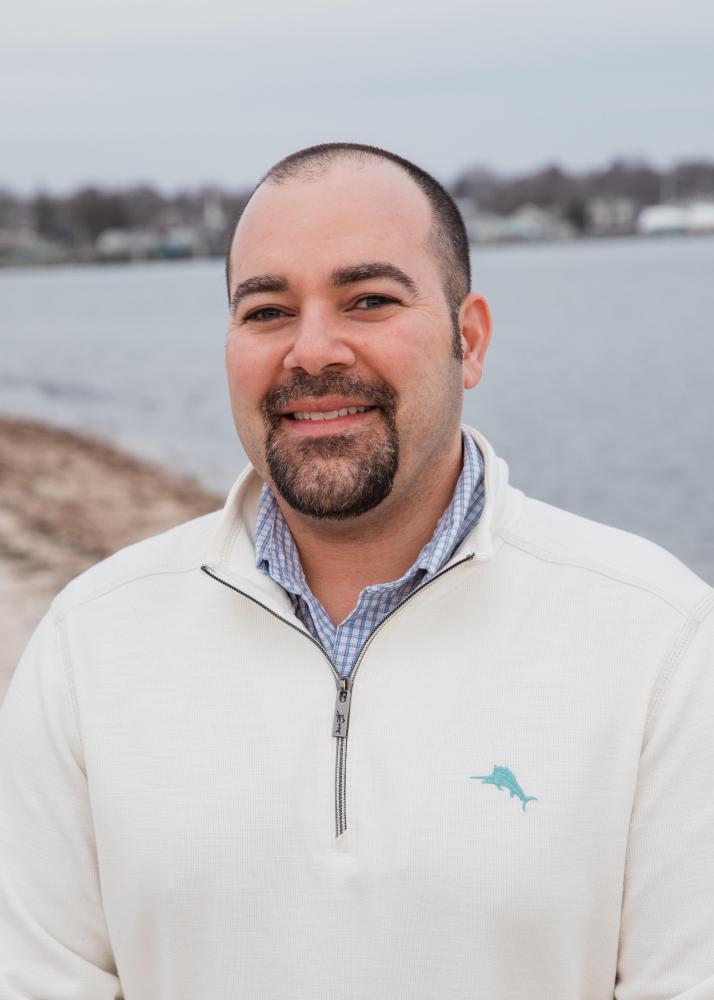 Nathan Silva won the Select Board seat with 1,575 votes.
 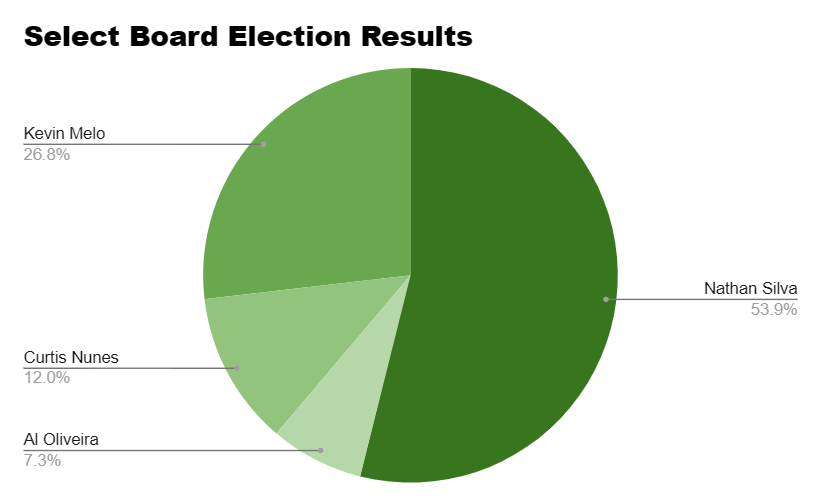 Election results.
 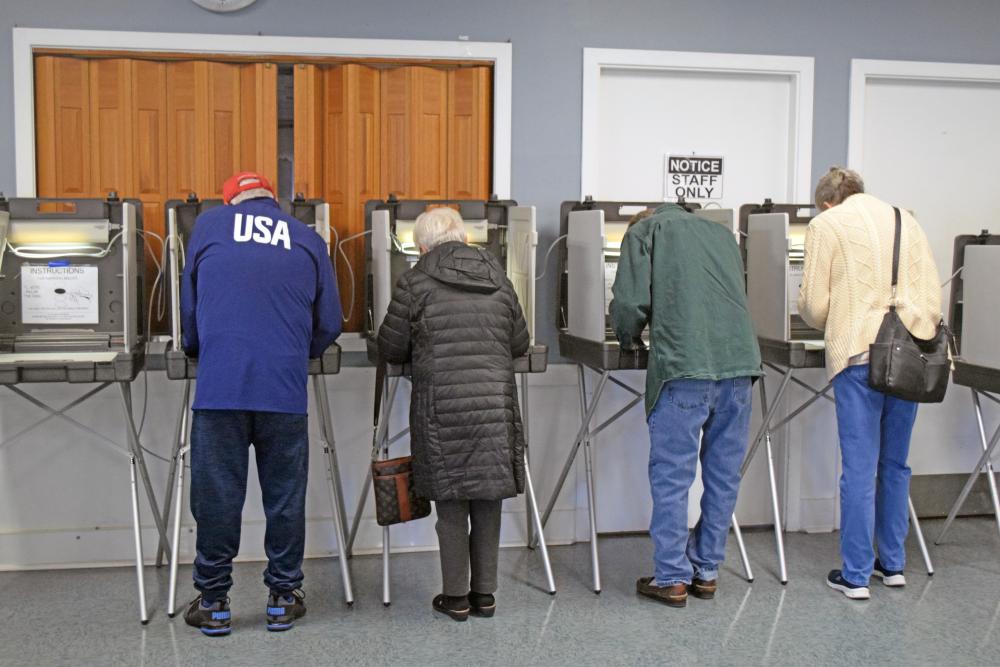 Voters at the Council on Aging fill out their ballots. Photos by Kat Sheridan
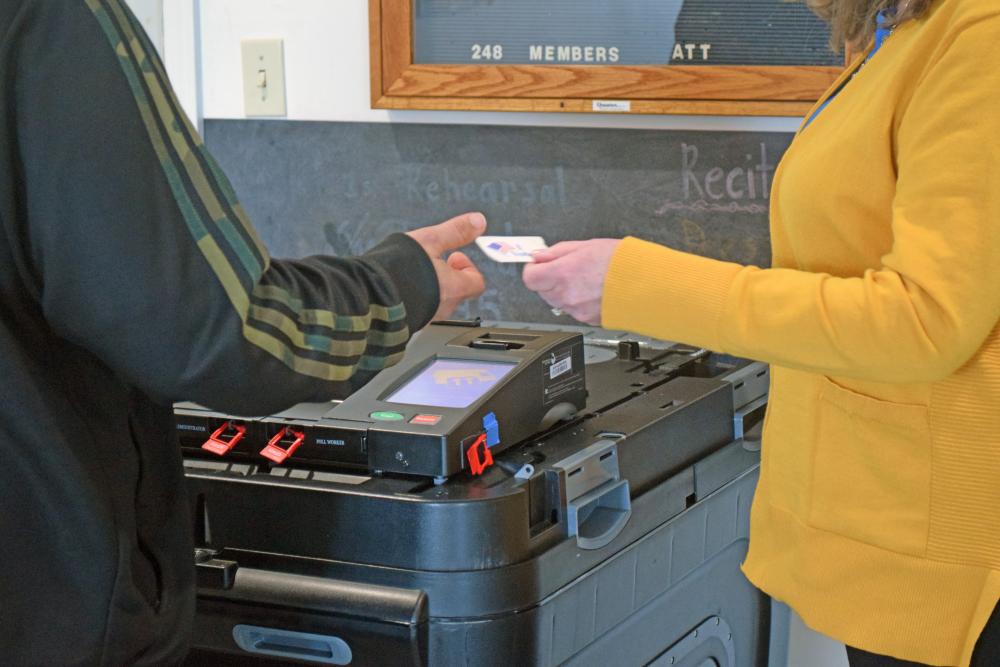 A voter grabs an "I voted" sticker.
 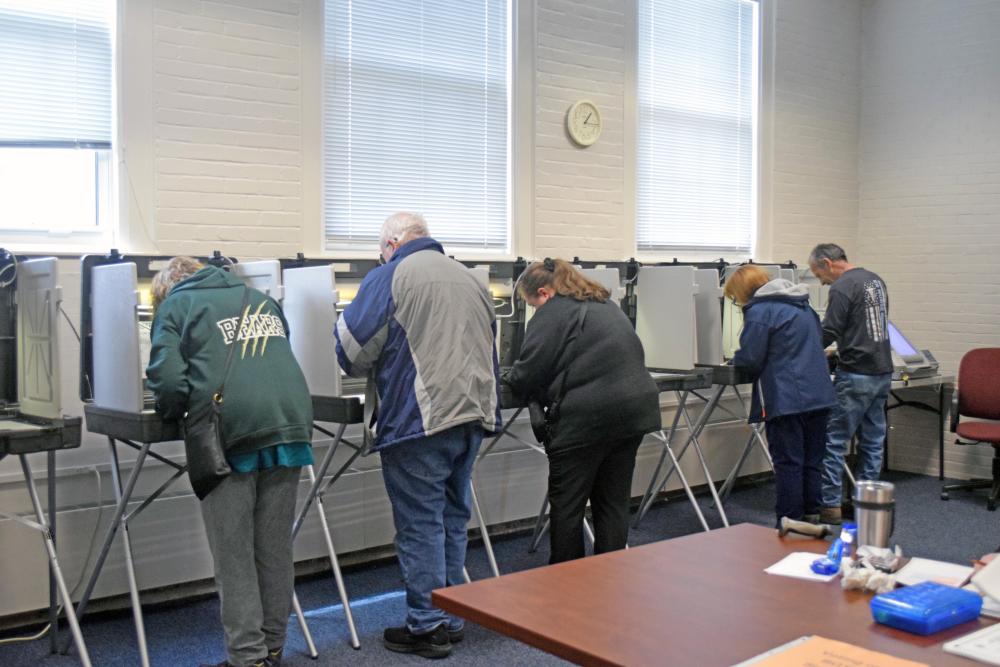 Voters at Town Hall fill in their ballots.
 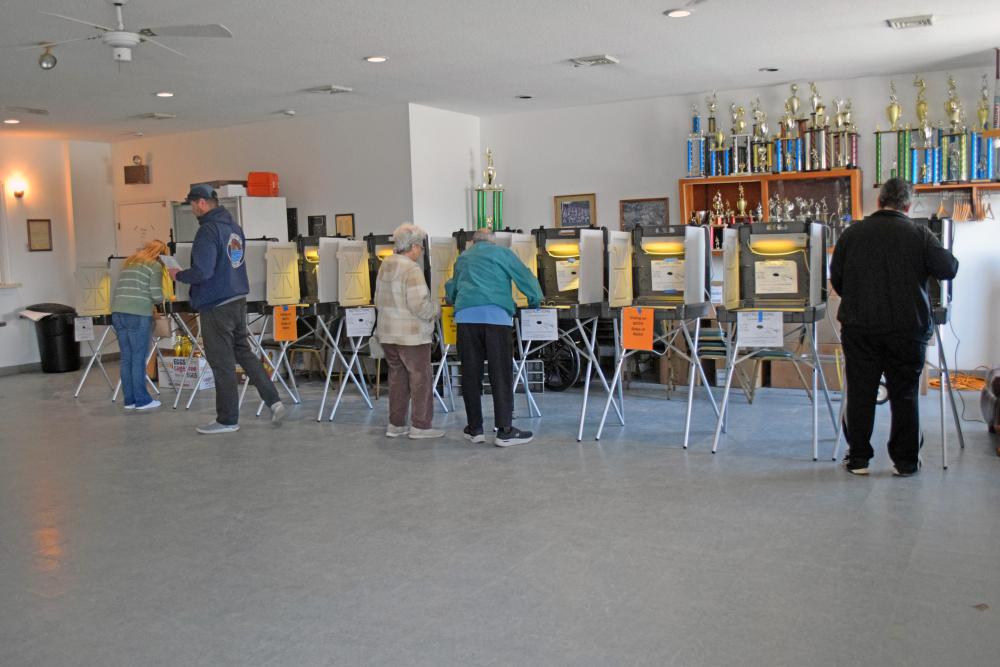 Voters at the Dartmouth Youth Athletic Association fill in their ballots.
 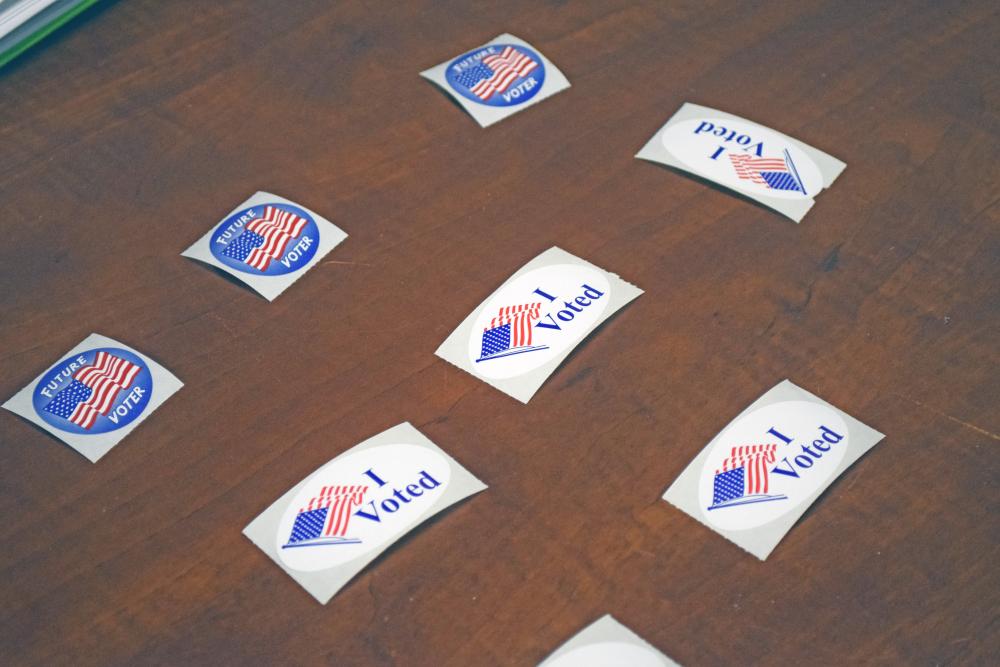 "I Voted" stickers voters could take after turning in their ballots.
 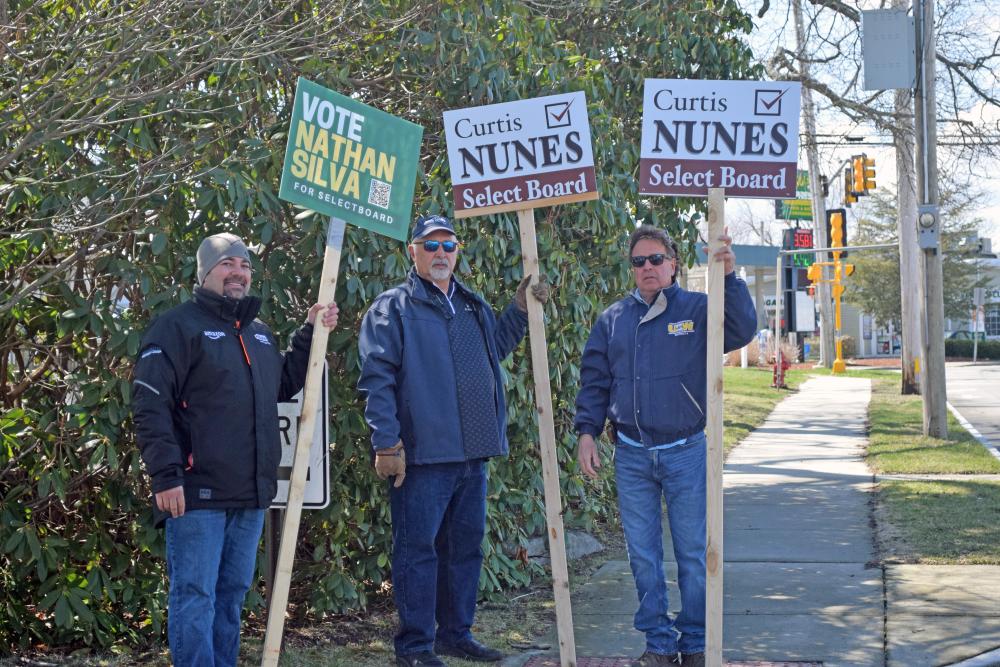 Nathan Silva, Curtis Nunes, and one of Nunes' supporters campaign outside of the Council on Aging.
 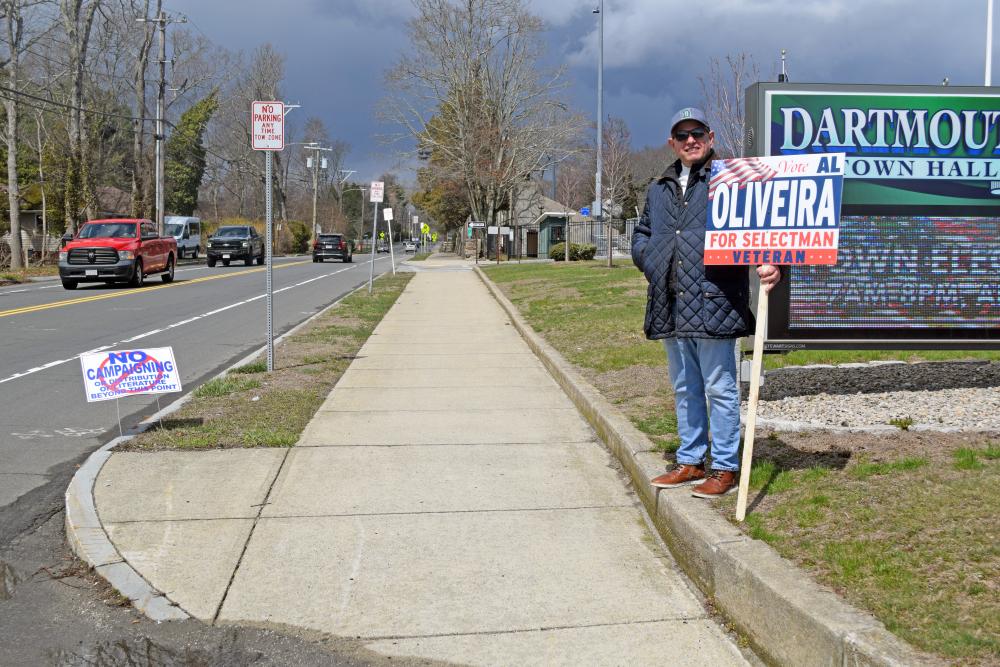 Al Oliveira campaigns outside Town Hall.
 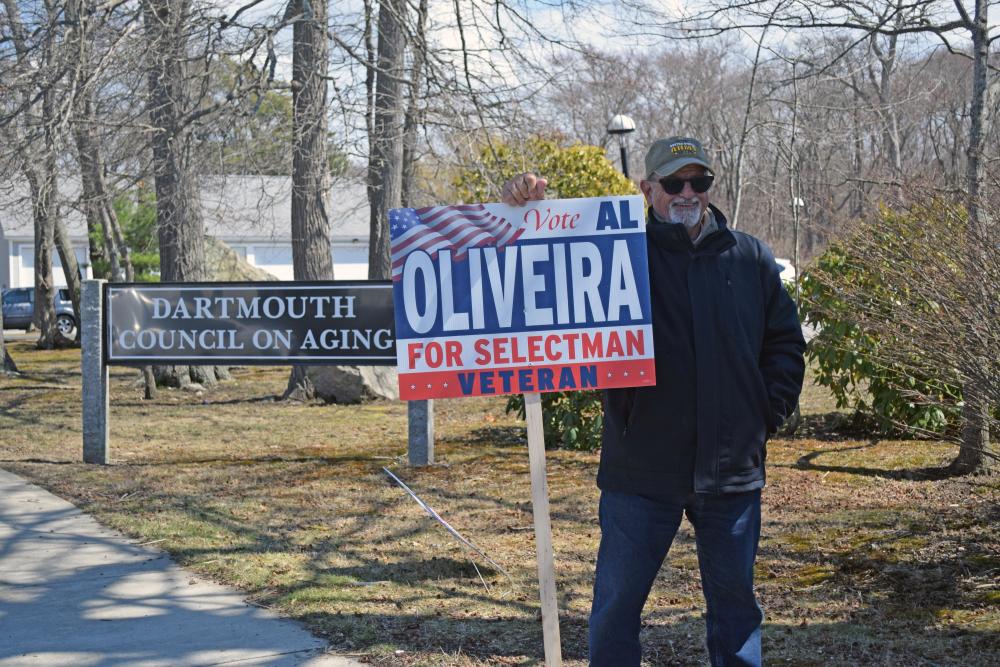 A man campaigns for Al Oliveira at the Council on Aging.
 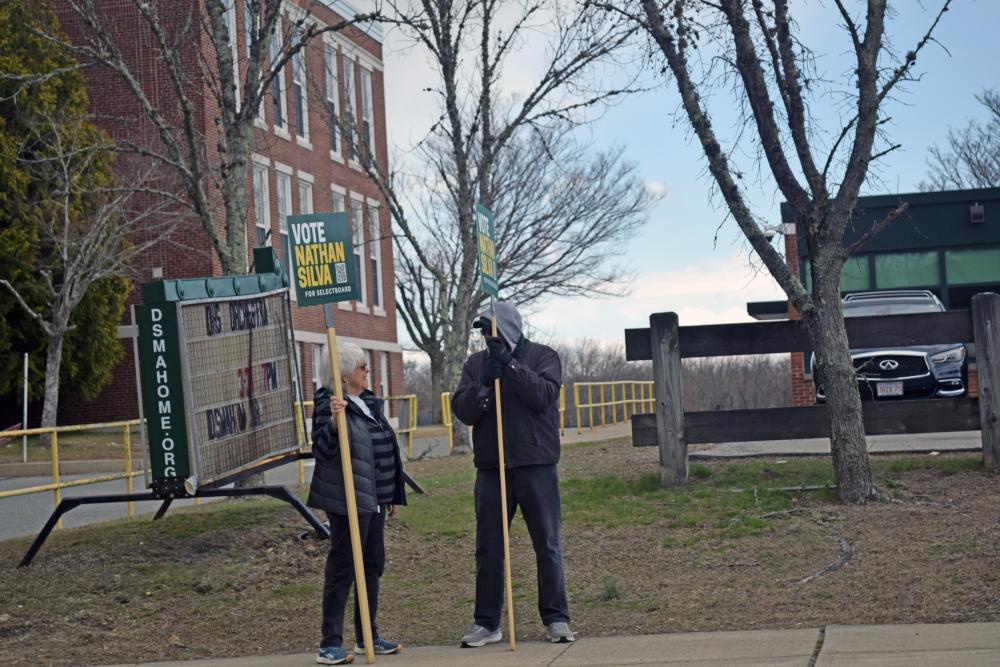 Two people campaign for Nathan Silva outside Town Hall.
Nathan Silva won the Select Board seat with 1,575 votes.
Election results.
Voters at the Council on Aging fill out their ballots. Photos by Kat Sheridan
A voter grabs an "I voted" sticker.
Voters at Town Hall fill in their ballots.
Voters at the Dartmouth Youth Athletic Association fill in their ballots.
"I Voted" stickers voters could take after turning in their ballots.
Nathan Silva, Curtis Nunes, and one of Nunes' supporters campaign outside of the Council on Aging.
Al Oliveira campaigns outside Town Hall.
A man campaigns for Al Oliveira at the Council on Aging.
Two people campaign for Nathan Silva outside Town Hall.
Two people campaign for Nathan Silva outside Town Hall.
Nathan Silva won the Select Board seat with 1,575 votes.
Election results.
Voters at the Council on Aging fill out their ballots. Photos by Kat Sheridan
A voter grabs an "I voted" sticker.
Voters at Town Hall fill in their ballots.
Voters at the Dartmouth Youth Athletic Association fill in their ballots.
"I Voted" stickers voters could take after turning in their ballots.
Nathan Silva, Curtis Nunes, and one of Nunes' supporters campaign outside of the Council on Aging.
Al Oliveira campaigns outside Town Hall.
A man campaigns for Al Oliveira at the Council on Aging.
Two people campaign for Nathan Silva outside Town Hall.
With 1,575 votes, candidate Nathan Silva defeated three other Select Board hopefuls in the April 7 Town Election.
Silva’s win comes after incumbent Stanley Mickelson decided not to run for reelection after serving on the Board for 12 years.
The race for the Select Board seat was also the only one contested this year.
Silva won with 53.9% of votes while opponents Kevin Melo, Curtis Nunes and Al Oliveira received 26.6%, 12% and 7.3% of the vote, respectively.
“I feel great,” Silva said. “The whole campaign was a team effort. I had a great group of people that were working with me. I think it’s clear that the message that I was sending resonated with the people in town.”
He added, “I think we’ve got a lot of people who wouldn’t have otherwise been engaged, to be engaged and that’s a win for the town.”
Silva said that his first government act will be to meet up with the other Select Board members, introduce himself to the department heads and meet people in town who he hasn’t met with already.
“Really just getting my feet wet and understanding what is important to the various people within our town’s government, so that I can work effectively as a team with the rest of the Select Board, to move our town forward, plan for the future and get things moving,” he said.
Melo said that he looks forward to watching Silva “succeed for the town” and noted that it’s now time to move forward with Silva as the next Select Board member.
“We all have to band together and support him, and hopefully do what’s right for the town,” he said.
Melo also said that he’s happy with the way he campaigned and said that he “enjoyed” and “appreciated” his voters’ support.
Oliveira said that “a lot of the other opponents, they’ve been working in town, they’ve been doing a lot throughout the years, they’ve been meeting a lot of the folks in town. I myself am working out of town and I don’t spend that much time … so the notoriety is definitely there.”
He added, “I still feel that I am the most experienced to be on the board but the voters voted.”
Nunes thanked everyone who supported him said "I look forward to working with [Silva]in the future."
He added, "The biggest diuasappointment of the day was the voter turnout."
Turnout this year was unofficially 11.5% —- up from last year by 2.5% —- with 2,958 out of 25,643 registered voters casting a ballot.
Town Clerk Sarah Haskell Arruda said that voter turnout tends to be up when a contested race is on the ballot and noted that this year it seemed that the candidates “worked really hard to not only get across their message, but the message of how important it is to vote in your local election.
She noted that she had expected the turnout to be a bit higher but said getting double digits is “better than usual.”
Results will remain unofficial for the next few days as Haskell Arruda must add in the hand count and resolve write-in votes to see who won the open seat on the Board of Assessors.
There were 516 write-in votes for the seat on the Board of Accessors, which was left open after incumbent Robert Michaud died at the end of February.
“We’ll have to tally those throughout all nine precincts, and then whoever got the most votes will get it,” she said. “But we have to actually go ahead and look at that because our computer obviously can’t read that on the voting machine.”
Throughout the day from 7 a.m. to 8 p.m. registered voters visited their polling location to cast their ballot, including Cynthia Marland of Precinct 5, who said she finds voting important because “a lot of people died, including women, trying to get the vote.”
She added, “I think about that a bit when I’m voting.”
Scott Ciardi, also of Precinct 5, said he voted because “We live here, and it’s kind of important to know who’s running things. When you don’t participate you don’t get to complain, and I love to complain.”
Regardless of having a contested Select Board race, a number of voters stated they went out and voted due to doing so annually rather than for this specific election.
“It’s an obligation to vote, no matter what,” said Marcy Wintrub, from Precinct 9.
Many others agreed with Wintrub, such as 91-year-old Claire Pickering from Precinct 9 who went to vote after the rain stopped and Janet Williams from Precinct 9, who always votes after doing extensive research on the candidates.
“Democracy is based in your local community,” said Matthew Esner of Precinct 9.
Megan Sommerville of Precinct 9 added, “It seems like there are opportunities to change things on the local level that don’t seem to be changeable on the national level.”
The other nine seats up for grabs went uncontested, with all incumbents winning reelection.
James Griffith, who was recently appointed to the Board of Health, also won an uncontested seat for the Board of Health.
Kathleen Amaral and Elizabeth Coughlin, both incumbents, won the two uncontested seats for the School Committee.
Both ballot questions also passed, which means that the Board of Public works will be expanding to a five member board and that the schedule for when new regulations are enacted will change.